Authentic Egyptian Fattah
If you want to know what Eid smells like in an Egyptian home, for me, it is the unmistakable sizzle of tasha—crushed garlic and sharp white vinegar hitting hot broth and filling the kitchen with that bold, mouthwatering aroma. Growing up in Cairo, that smell meant one thing: Egyptian Fattah was almost ready.
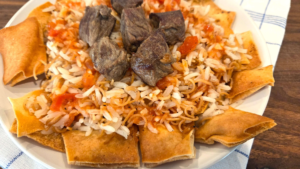
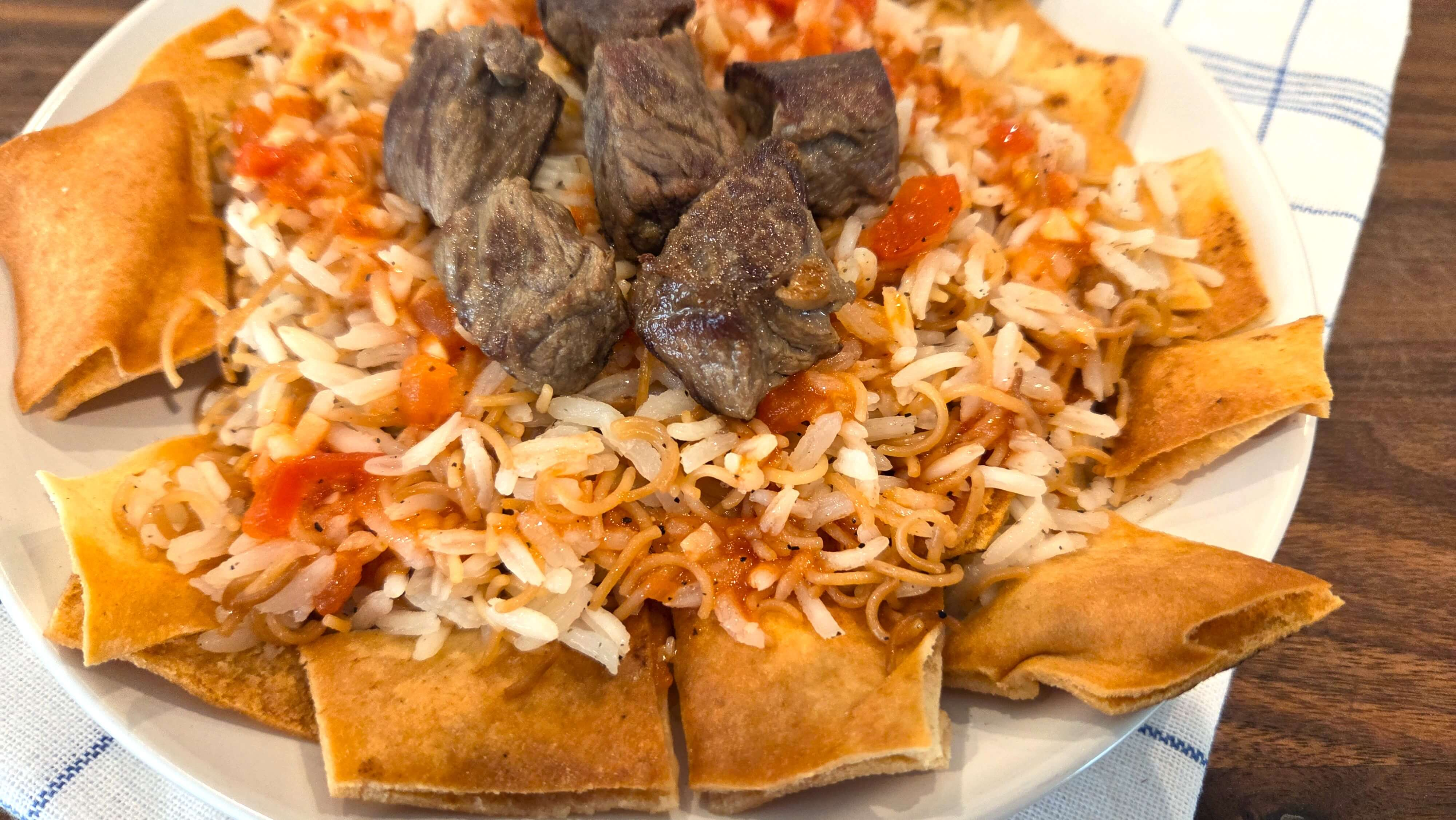
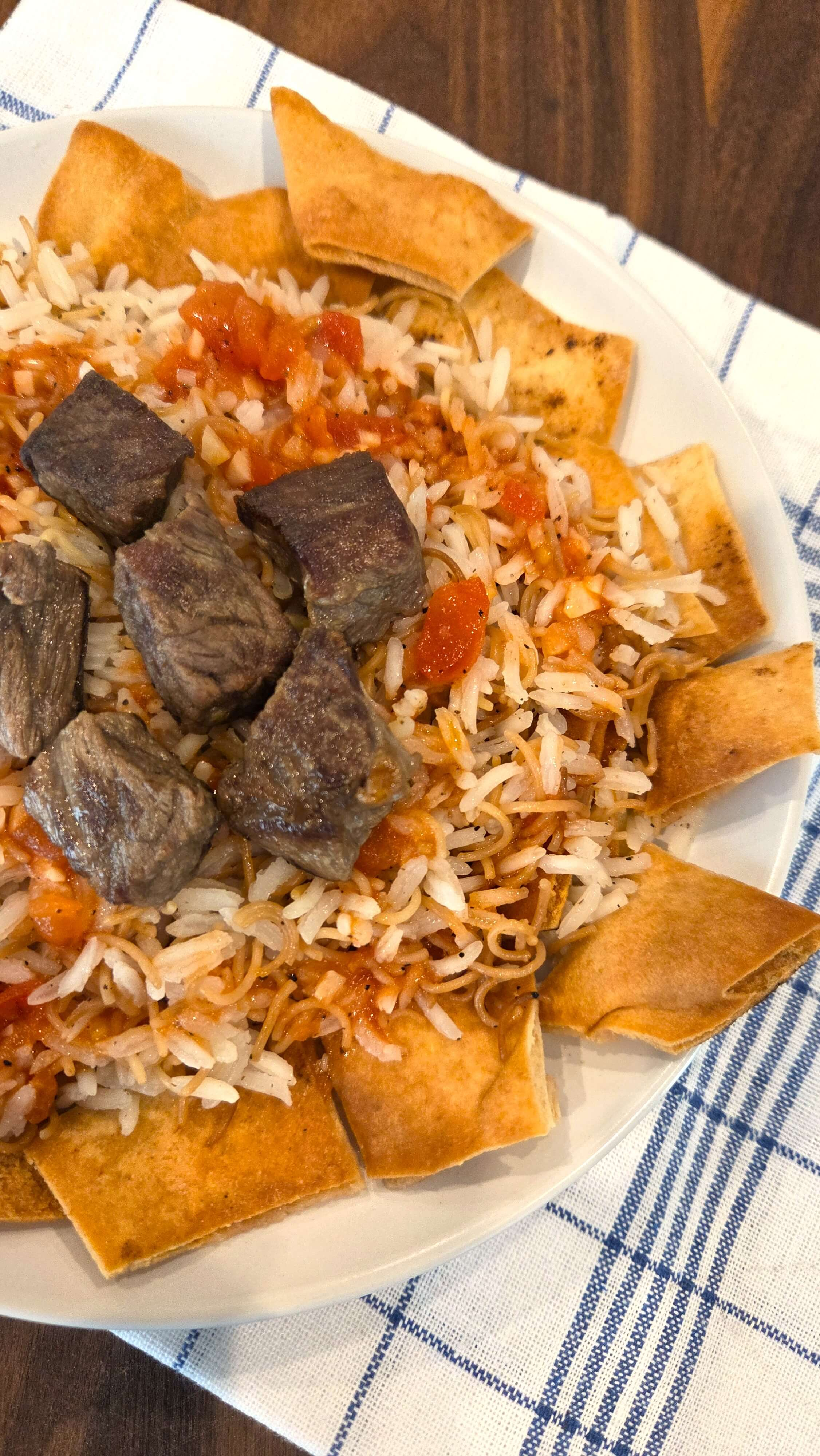
I can still picture Eid at my grandmother’s house, with the whole family gathered around her dining table and everyone waiting for that big platter of Fattah to make its appearance. Crispy toasted bread, soaked with flavorful meat broth and topped with fluffy vermicelli rice, tender beef, and our garlicky vinegar tomato sauce—it was rich, comforting, and made to be shared. The kitchen would be full of laughter and conversation, and somehow everyone always found room for one more spoonful.
For me, Fattah is more than just a traditional Egyptian dish. It is part of Eid. It is one of those meals that brings everyone to the table and makes an ordinary family gathering feel like a celebration. Even now, the smell of garlic and vinegar cooking together takes me right back to those Eid mornings at my grandmother’s house.
The good news is that making Egyptian Fattah at home is much easier than it looks. In this recipe, I’ll show you how to build each layer so you get tender, flavorful beef, fluffy vermicelli rice, crispy toasted bread, and that bold garlic-vinegar tomato sauce in every bite. It is the kind of comforting Egyptian meal that belongs right in the middle of a table surrounded by family.
What Is Egyptian Fattah?
Egyptian Fattah is a traditional Egyptian layered dish made with crispy toasted bread, fluffy vermicelli rice, tender beef, flavorful meat broth, and a bold garlic-vinegar tomato sauce. The layers come together in one generous platter, giving you a delicious mix of crispy, fluffy, tender, tangy, and savory in every bite.
What really makes it special is the tasha—garlic and vinegar warmed together with broth and tomato to create that unmistakable Egyptian flavor and aroma. Egyptian Fattah is especially popular during Eid and big family gatherings, when it is served as a hearty centerpiece for everyone to share.
Why You’ll Love This Egyptian Fattah
There is a reason Fattah has a special place on Egyptian tables. It is comforting, hearty, full of bold flavors, and made for sharing with the people you love. Here’s why I think you’ll love it as much as my family does:
- It tastes like a celebration. The combination of tender beef, fluffy vermicelli rice, crispy toasted bread, and garlicky vinegar tomato sauce is pure Egyptian comfort food.
- That tasha is everything. The warm garlic and vinegar bring a bold, tangy flavor that wakes up every layer and makes the whole kitchen smell incredible.
- Perfect for family gatherings. This is a generous, satisfying platter that belongs right in the middle of the table, especially for Eid and special occasions.
- You can prepare it step by step. Each component is simple to make on its own, then everything comes together beautifully when you layer the dish.
- Every bite has a little bit of everything. Crispy bread, fluffy rice, tender beef, and that flavorful sauce come together in the perfect spoonful.
Ingredients You’ll Need
You’ll need a handful of simple ingredients to make this comforting Egyptian Fattah. Each layer brings something special, from the tender beef and fragrant broth to the crispy bread and bold garlic-vinegar tomato sauce.
- Beef chuck: Tender, flavorful beef that becomes beautifully soft after simmering in the seasoned broth.
- Yellow onion: Adds sweetness and savory depth to the beef broth as it cooks.
- Bay leaves: Infuse the broth with a subtle herbal aroma.
- Green cardamom: Adds a warm, fragrant flavor that gives the beef broth a lovely Egyptian touch.
- Mastic gum: A traditional Egyptian ingredient that adds a delicate, distinctive aroma to the broth.
- Egyptian short-grain rice: Creates the fluffy, slightly tender rice layer that makes Fattah so satisfying.
- Vermicelli: Toasted until golden, it adds a wonderful nutty flavor and texture to the rice.
- Ghee or butter: Adds richness and helps give the vermicelli its beautiful golden color.
- Pita or Egyptian baladi bread: Toasted until crisp, the bread forms the delicious bottom layer of the Fattah and soaks up the flavorful sauce.
- Garlic: The heart of the sauce, bringing that bold, savory flavor that makes Fattah instantly recognizable.
- White vinegar: Gives the sauce its signature sharp, tangy kick and balances the richness of the beef and rice.
- Fresh tomatoes: Add bright tomato flavor and natural sweetness to the sauce.
- Tomato sauce: Gives the garlic-vinegar sauce a rich tomato base and beautiful color.
- Beef broth: Adds deep, savory flavor to both the rice and the sauce while tying all the layers together.
- Salt and black pepper: Essential seasonings that bring all the flavors together.
How to Make Egyptian Fattah
Making Egyptian Fattah is all about preparing each layer so that everything is hot, flavorful, and ready to come together at the end. Here’s how I make it, step by step.
- Cook the Beef and Make the Broth
Start by making a flavorful broth for both the beef and the layers that come later. Add the onion, bay leaves, lightly crushed cardamom pods, mastic gum, salt, and black pepper to a large pot with the water.
Bring the broth to a boil, then add the beef chuck. As it cooks, skim off any foam that rises to the surface to keep the broth clean and clear. Lower the heat, cover the pot, and let the beef gently simmer until it is very tender and easy to pierce with a fork.
Once the beef is cooked, remove it from the pot and strain the broth to remove the aromatics. Keep the broth warm—you’ll use it to give both the rice and sauce that wonderful deep flavor.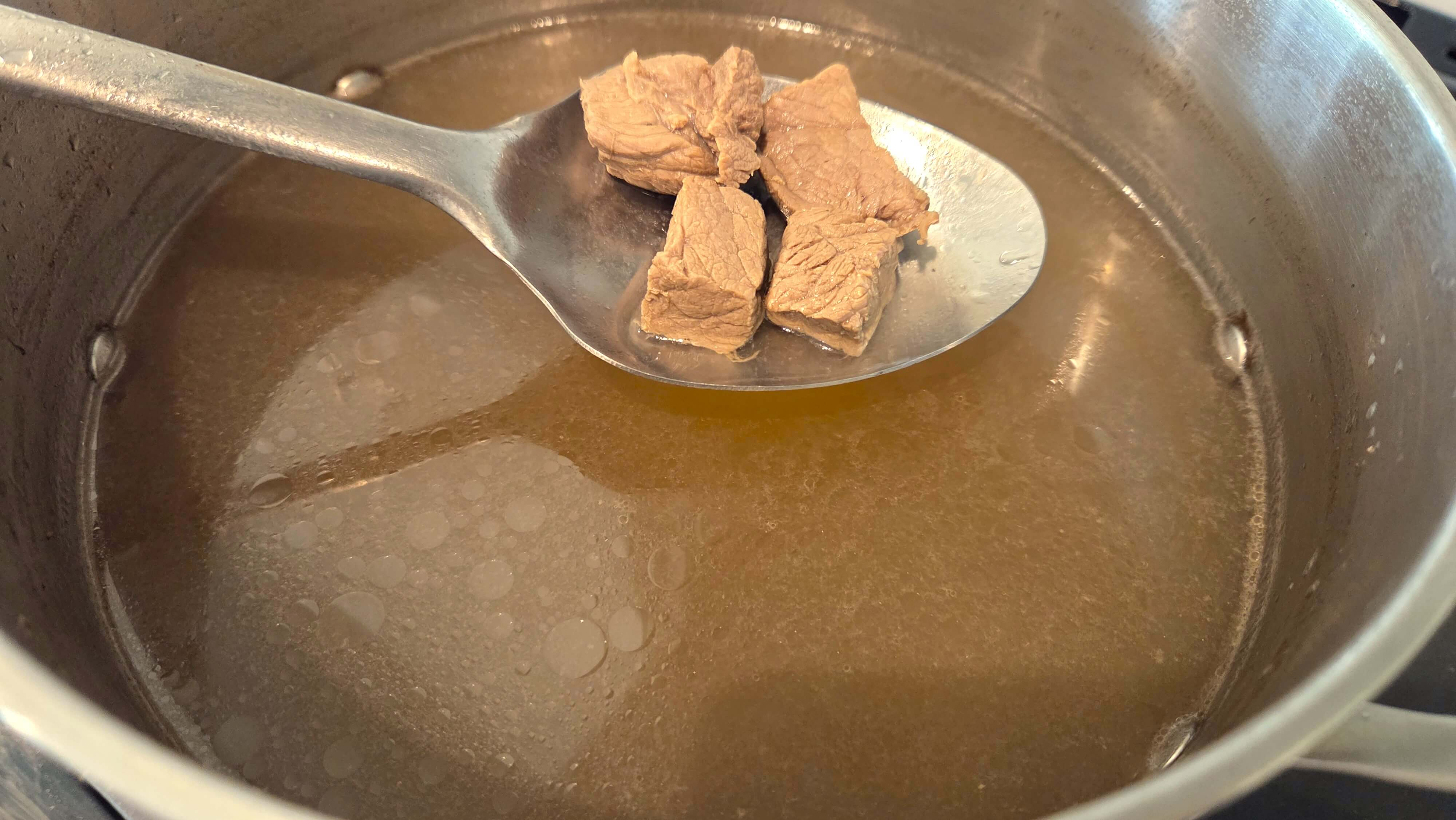
- Prepare the Vermicelli Rice
For that classic Egyptian rice texture, start by heating the ghee or butter in a pot and adding the vermicelli. Stir it frequently as it cooks until the little noodles turn evenly golden brown. Keep an eye on them because they can go from golden to burnt quickly.
Add the rinsed rice and stir it with the toasted vermicelli for a minute or two, allowing the grains to become coated in the flavorful fat. Pour in the warm beef broth, then season with salt and black pepper.
Bring everything to a boil, then reduce the heat to low and cover the pot. Cook until the rice is tender and has absorbed the broth. Let it rest, covered, before gently fluffing it with a fork.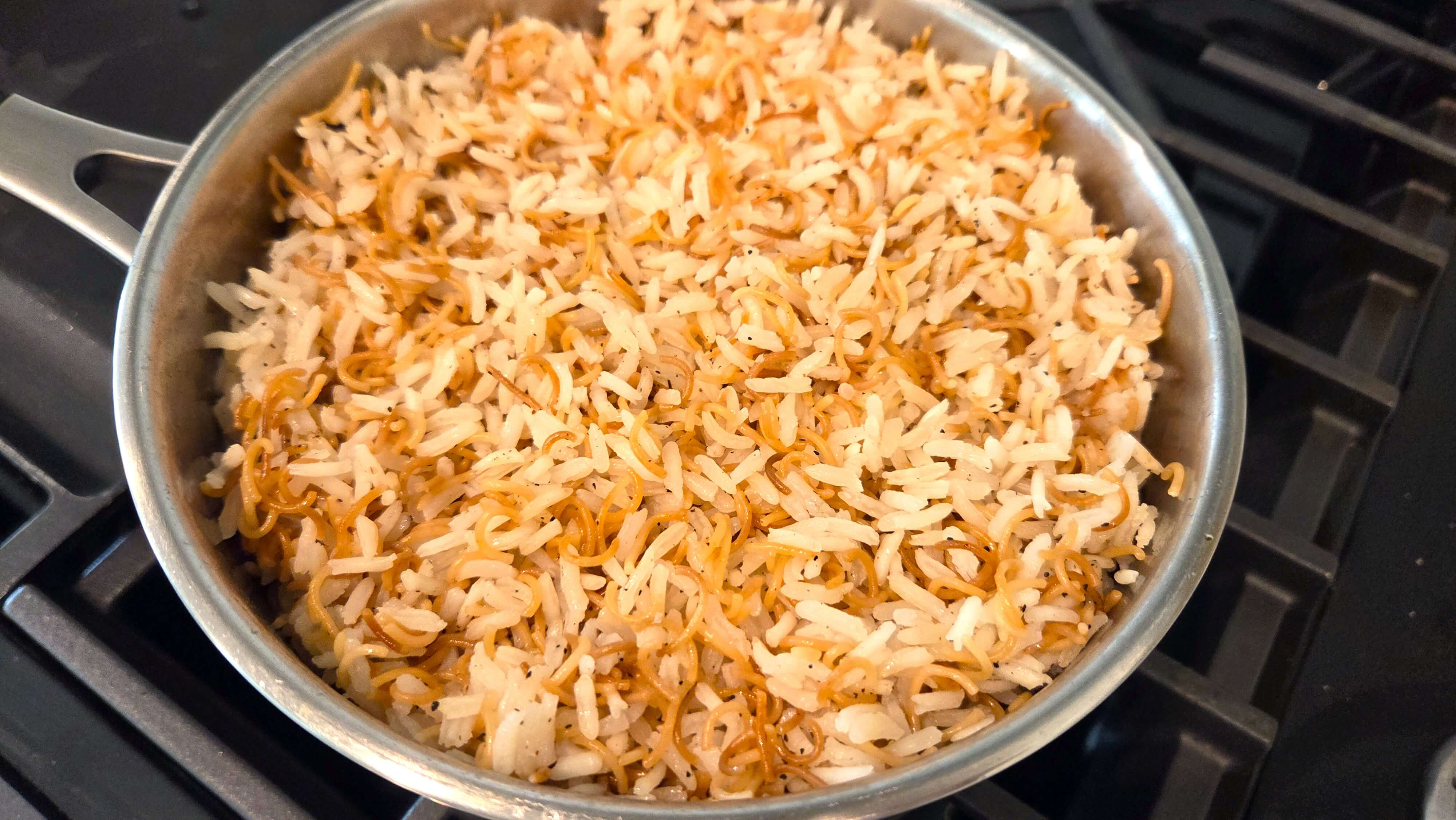
- Toast the Bread
While the rice cooks, prepare the bread layer. Cut the pita or Egyptian baladi bread into small bite-size pieces and spread them over a baking sheet.
Toss the bread with melted ghee or butter and a small pinch of salt, making sure the pieces are lightly coated. Bake until golden and crisp, turning them halfway through so they toast evenly.
You want the bread to be crispy on the outside but ready to soak up some of that flavorful sauce later. Don’t let it become too dark or hard.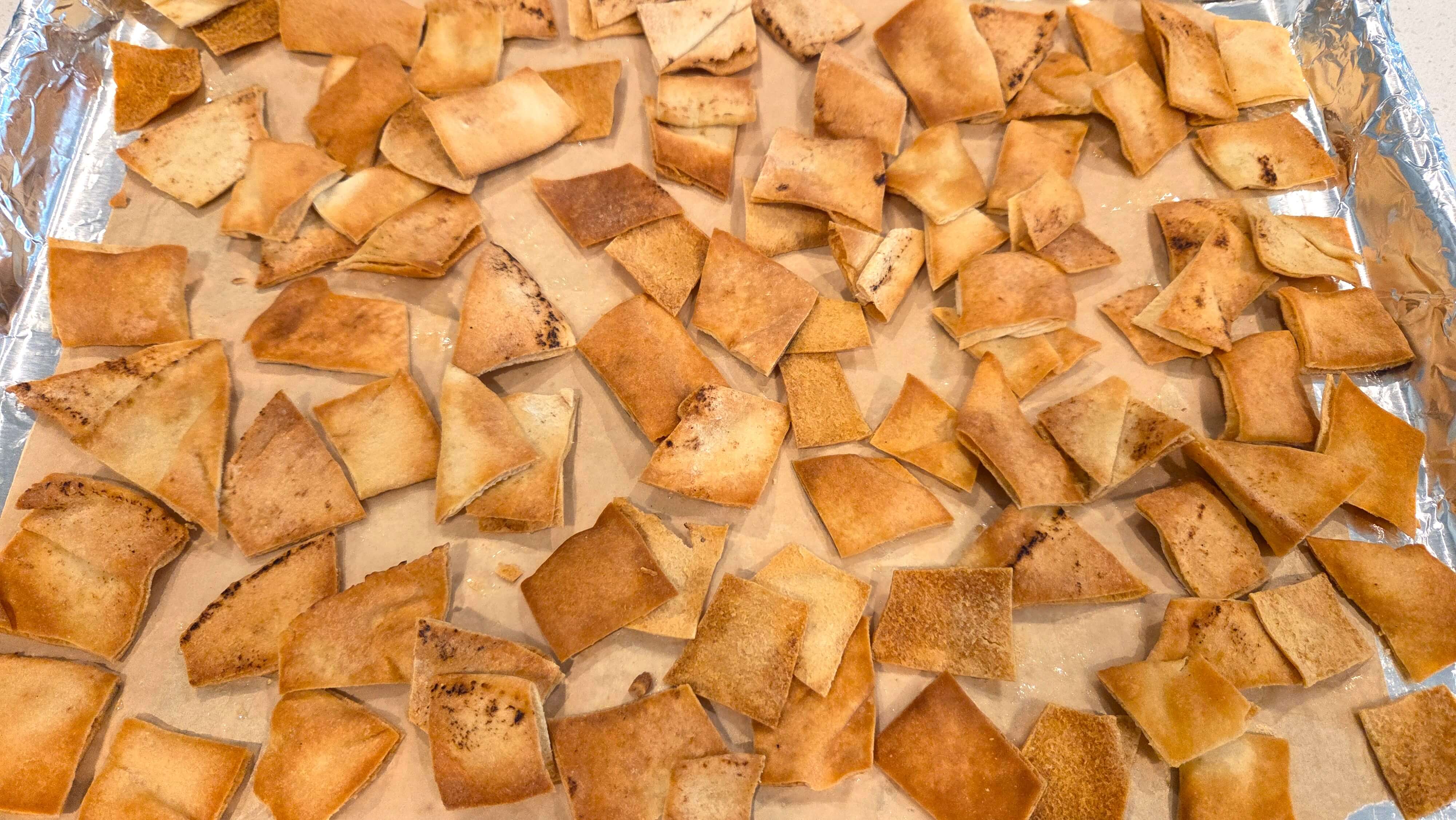
- Make the Garlic-Vinegar Tomato Sauce
Now comes one of my favorite parts—the garlicky sauce that gives Fattah its unmistakable Egyptian flavor. Heat the ghee or butter in a saucepan, then add the minced garlic and cook briefly until fragrant.
Add the diced tomatoes and let them cook until they begin to soften. Stir in the tomato sauce, white vinegar, and reserved beef broth, then season with salt and black pepper.
Let the sauce simmer uncovered so the flavors can come together and the tomatoes can soften. You want a flavorful sauce that is rich enough to coat the layers without becoming overly thick.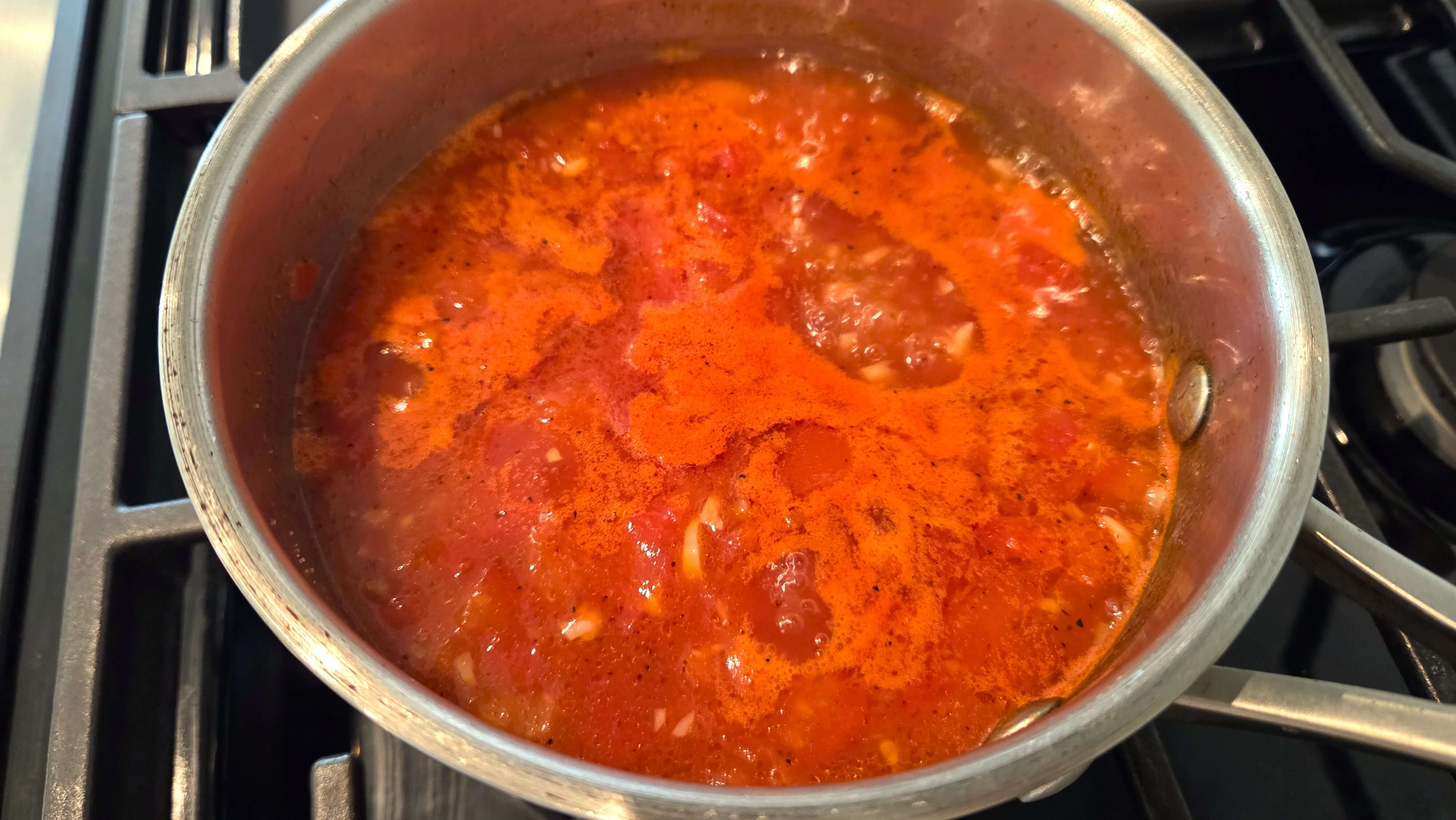
- Brown the Beef
Once the beef is tender from simmering in the broth, remove it and let any excess broth drain off. Heat a little ghee or butter in a large skillet over medium-high heat, then add the cooked beef pieces in a single layer.
Let the beef sear for a few minutes, turning the pieces occasionally, until they develop a beautifully browned exterior. You’re not cooking the beef again—you’re simply giving the already-tender pieces a delicious golden crust and deeper flavor.
Once browned, remove the beef from the skillet and keep it warm while you finish assembling the Fattah.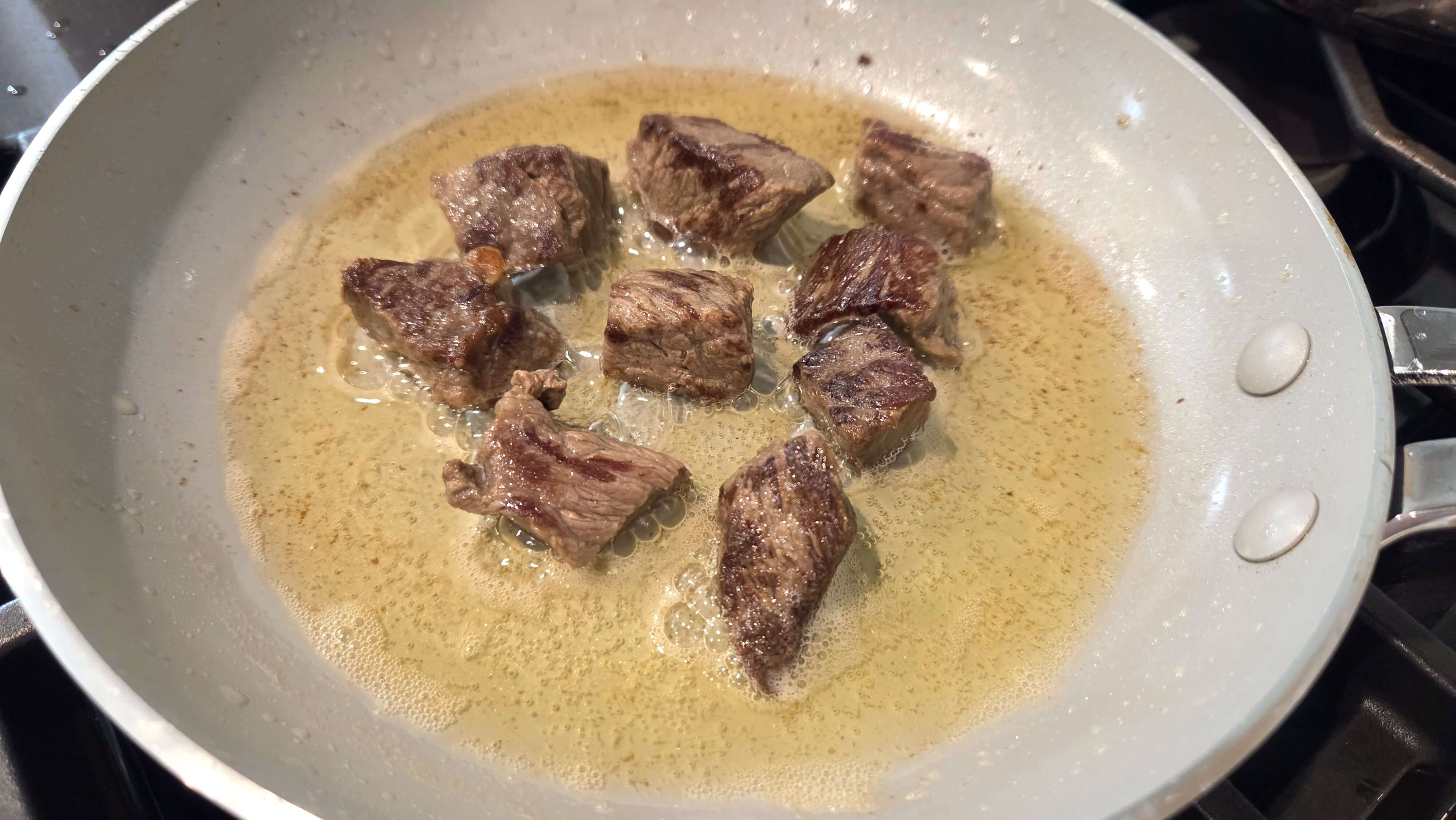
- Assemble the Egyptian Fattah
Now for the best part—bringing all those delicious layers together. Start by spreading the crispy toasted bread over a large serving platter.
Drizzle some of the warm garlic-vinegar tomato sauce over the bread, allowing it to soak in slightly while keeping some of that delicious texture. Spoon the fluffy vermicelli rice over the bread, then arrange the tender beef on top.
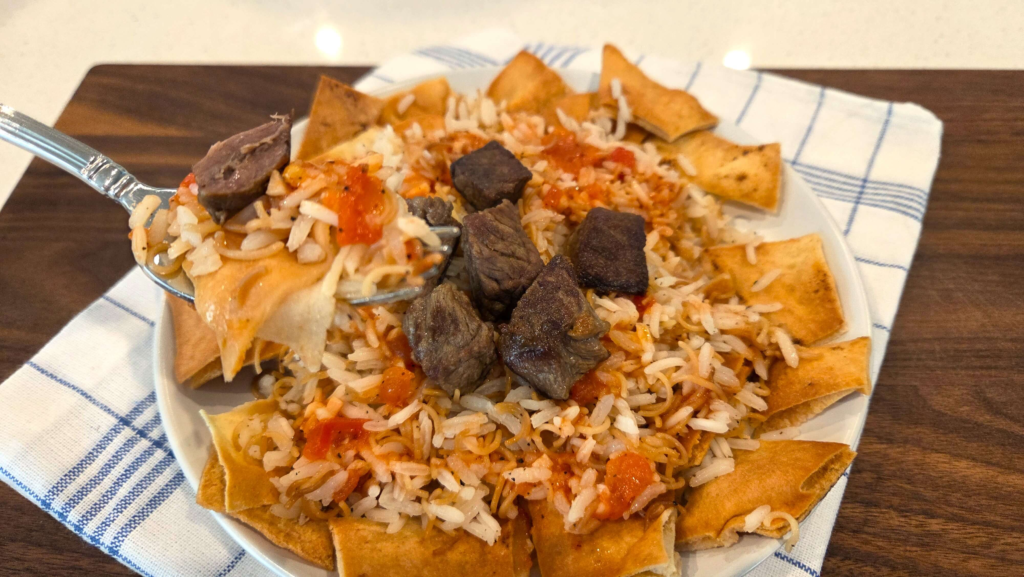
Finish by spooning the remaining sauce over the rice and beef. Serve the Fattah immediately while everything is warm and the bread still has that wonderful contrast between crispy edges and flavorful, sauce-soaked pieces.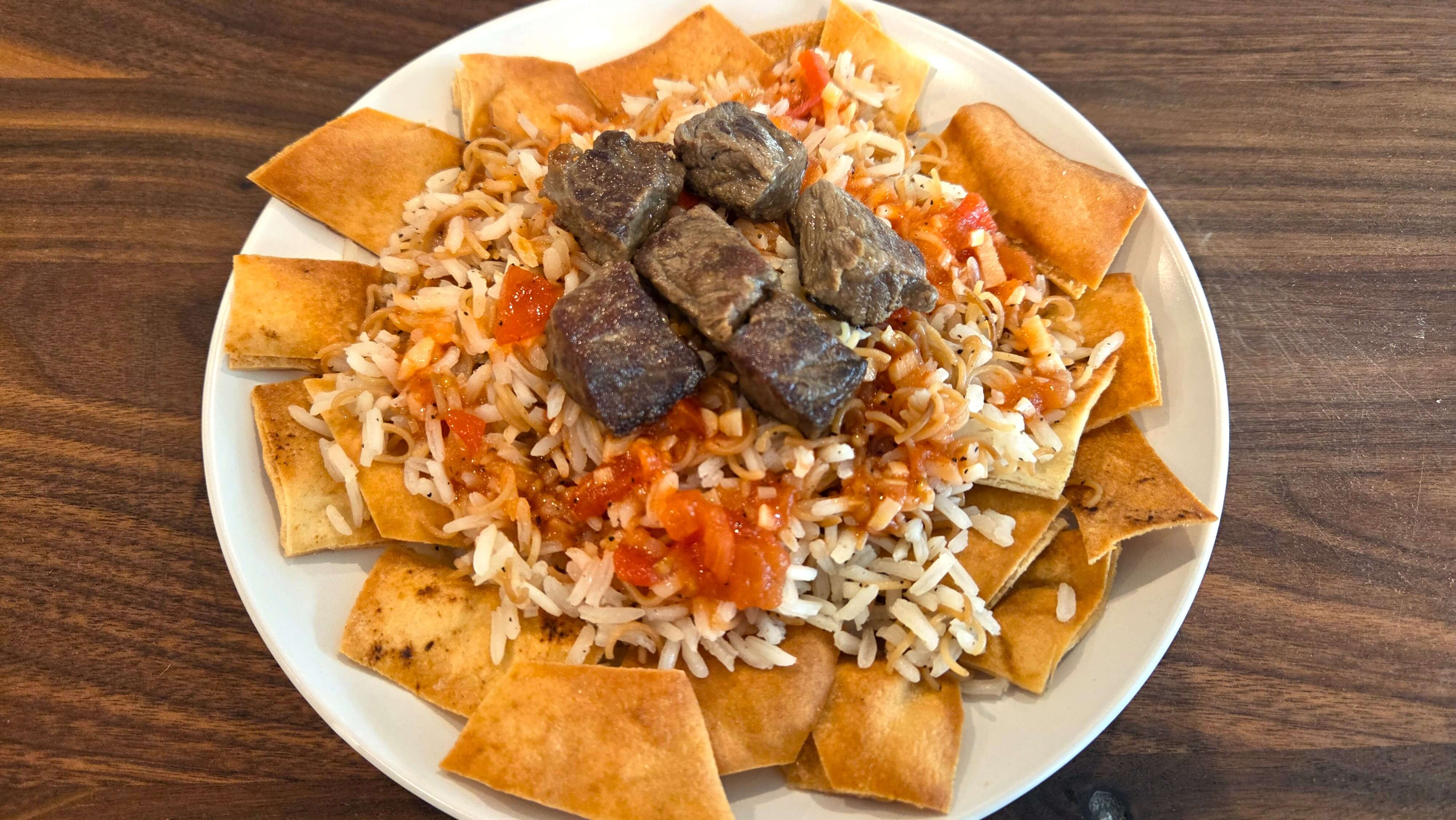
Tips for Perfect Fattah
A few little things make a big difference when making Fattah. These are the tips I always keep in mind when I want every layer to come together just right.
- Let the beef get truly tender: Give the beef enough time to simmer gently until it is fork-tender. A tender piece of beef makes every bite of Fattah so much more enjoyable.
- Keep that broth—it is liquid gold: Don’t throw away the broth after cooking the beef. You’ll use it to cook the rice and add flavor to the garlic-vinegar tomato sauce, giving the whole dish a delicious depth. Using the cooking broth across the different layers is also a common feature of Egyptian Fattah recipes.
- Toast the vermicelli until golden: Stir the vermicelli frequently as it cooks in the ghee or butter. You want a beautiful golden-brown color without letting it burn.
- Get the bread crispy: Toast the bread until golden and crisp. It should be sturdy enough to soak up some of the sauce while still keeping a little texture underneath the rice.
- Don’t drown the bread: Add the warm sauce gradually rather than soaking the bread completely. That way, you get that delicious tender-and-crispy texture instead of a soggy bottom.
- Brown the beef before serving: Once the beef is tender, give the pieces a quick sear in ghee or butter. This adds beautiful color and an extra layer of savory flavor.
- Make the sauce bold: The garlic and vinegar are what give this dish its signature Egyptian punch. Let the garlic become fragrant before adding the vinegar, then simmer the sauce so all those flavors come together.
- Assemble just before serving: Fattah is at its best when the bread, rice, beef, and sauce are hot and freshly layered. Serve it right away so you can enjoy that wonderful contrast of textures.
What to Serve With Egyptian Fattah
Fattah is already a hearty meal, so when I serve it for a family gathering, I like to keep the sides simple and let that beautiful platter of bread, rice, beef, and garlicky sauce be the star. A few fresh or traditional Egyptian dishes are all you need to turn it into a beautiful family feast.
- Egyptian Molokhia: If you want to make the table feel truly Egyptian, this is one of my favorite choices. Its silky texture and garlicky flavor are a wonderful match for the rich Fattah.
- Mediterranean Cucumber Tomato Salad: A fresh, crisp salad is perfect alongside such a hearty dish. The juicy tomatoes, crunchy cucumbers, and bright dressing bring a refreshing contrast to the warm layers of Fattah.
- Kebda Eskandarani: For a real Egyptian feast, a platter of spicy Alexandrian-style liver makes a bold addition. It is especially nice when you are serving a larger crowd and want a table full of classic Egyptian dishes.
- Egyptian Kofta Kebabs: These juicy, warmly seasoned kebabs are another delicious option for a big family gathering. They add a smoky grilled flavor and make the meal feel extra festive.
- Egyptian Moussaka with Ground Beef: If you’re putting together a generous Egyptian spread, this rich and comforting vegetable dish fits right in alongside Fattah.
- Shorbet Lesan El Asfour: For a special family dinner, start the meal with a small bowl of this comforting Egyptian orzo soup before bringing out the Fattah.
For a simple Eid table, though, Fattah + Egyptian Molokhia + a fresh cucumber and tomato salad is more than enough. Add some pickles or fresh vegetables on the side, gather everyone around the table, and you have the kind of Egyptian feast I grew up loving.
How to Store and Reheat Fattah
Fattah is best when freshly assembled, but if you have leftovers, a few simple storage tricks will help you keep the rice fluffy, the beef tender, and the toasted bread from turning soggy.
How to Store Egyptian Fattah
- Store the bread separately: Keep any leftover toasted bread in its own airtight container so it stays as crisp as possible.
- Keep the rice, beef, and sauce separate: Store each component in airtight containers in the refrigerator for up to 3 days.
- Don’t store assembled Fattah if you can avoid it: Once the bread is mixed with the broth and sauce, it will continue to soften in the refrigerator.
- Cool and refrigerate promptly: Refrigerate leftovers within 2 hours of cooking.
- Can you freeze Egyptian Fattah? Yes, you can freeze the cooked beef, rice, and sauce separately for longer storage. I recommend making fresh toasted bread when you’re ready to serve because frozen and thawed bread will lose its crisp texture.
How to Reheat Egyptian Fattah
- Reheat the rice: Warm the rice gently, adding a small splash of beef broth or water if it has dried out.
- Reheat the beef: Warm the beef until heated through, using a covered skillet or microwave to help keep it tender.
- Reheat the sauce: Warm the garlic-vinegar tomato sauce gently in a small saucepan or microwave-safe bowl.
- Crisp the bread again: Warm the toasted bread in a 375°F oven or air fryer for a few minutes to bring back some of its crunch. Avoid the microwave for the bread because it will make it soft.
- Assemble just before serving: Layer the crispy bread, warm rice, tender beef, and sauce right before eating for the best texture.
- For frozen leftovers: Thaw the beef, rice, and sauce in the refrigerator before reheating, then prepare fresh toasted bread and assemble everything just before serving.
Frequently Asked Questions About Egyptian Fattah
Egyptian Fattah is made with layers of crispy toasted bread, fluffy rice, tender beef or lamb, flavorful meat broth, and a bold garlic-vinegar tomato sauce. The components are layered together just before serving so you get a delicious combination of crispy, fluffy, tender, savory, and tangy textures and flavors.
Beef chuck is an excellent choice because it becomes tender and flavorful after simmering in the broth. Lamb is also traditionally used, especially for festive meals such as Eid al-Adha. For this recipe, beef chuck gives you tender meat while also creating a rich broth for the rice and sauce.
Yes. You can prepare the beef and broth, rice, toasted bread, and garlic-vinegar tomato sauce ahead of time, but keep the components separate. Assemble the Fattah just before serving so the toasted bread does not become overly soft.
The garlic and vinegar create the signature bold, tangy flavor that makes Egyptian Fattah so distinctive. In this recipe, the garlic is gently sautéed before the vinegar, tomatoes, and beef broth are added, creating a flavorful sauce that balances the richness of the beef and rice.
Toast the bread until it is deeply golden and crisp, then add the warm sauce gradually rather than completely soaking it. Assemble the dish right before serving so the bread has a chance to absorb some of the flavorful sauce while still keeping a little of its texture. Fattah is best served immediately after assembly.
You can freeze the cooked beef, rice, and sauce separately, but I recommend making fresh toasted bread when you’re ready to serve. Freezing and thawing the assembled dish will make the bread soft and will not give you the same texture as freshly toasted bread. For the best results, thaw the components in the refrigerator, reheat them separately, and assemble with fresh toasted bread.
Ready to fill your kitchen with the unmistakable aroma of garlic, vinegar, and warm broth and bring a little taste of an Egyptian Eid table home? Grab the recipe card below for the exact ingredients, cooking times, and simple steps to make this Egyptian Fattah from scratch.
Egyptian Fattah
Ingredients
Method
- Cook the Beef and Make the Broth: Place the onion, bay leaves, cardamom, mastic gum, salt, and black pepper in a large pot. Add 8 cups of water and bring to a boil. Add the beef, skim off any foam, then reduce the heat to low. Cover and simmer for about 1 hour, or until the beef is very tender. Remove the beef and strain the broth. Keep the broth warm.
- Prepare the Vermicelli Rice: Heat the ghee or butter in a large saucepan. Add the vermicelli and cook, stirring frequently, until golden brown. Add the rice and stir for 1–2 minutes. Pour in 2½ cups warm beef broth and season with salt and black pepper. Bring to a boil, reduce the heat to low, cover, and cook for about 20 minutes, or until tender. Let the rice rest, covered, for 10 minutes, then fluff with a fork.
- Toast the Bread: Preheat the oven to 375°F. Cut the bread into bite-size pieces and place on a baking sheet. Brush with melted ghee or butter and a pinch of salt. Bake for 8–12 minutes, turning halfway through, until golden and crisp.
- Make the Garlic-Vinegar Tomato Sauce: Heat the ghee or butter in a saucepan. Add the garlic and sauté for about 30 seconds. Add the diced tomatoes and cook for 3–4 minutes. Stir in the tomato sauce, vinegar, and ½ cup beef broth. Season with salt and black pepper and simmer uncovered for about 10 minutes, until the sauce thickens slightly.
- Brown the Beef: Heat a skillet over medium-high heat with a little ghee or butter. Add the cooked beef and sear for a few minutes, turning occasionally, until browned.
- Assemble the Egyptian Fattah: Layer the crispy toasted bread in a serving platter. Drizzle with some of the warm garlic-vinegar tomato sauce. Add the vermicelli rice, then arrange the browned beef on top. Spoon the remaining sauce over the beef and rice. Serve immediately.
Notes
- Toast the vermicelli until golden: This gives the rice a delicious nutty flavor and classic Egyptian character.
- Use hot beef broth: Using the flavorful broth instead of plain water gives the rice much more depth.
- Don’t drown the bread: Add the sauce gradually so the bread becomes flavorful while keeping some texture.
- Keep the rice fluffy: Let the rice rest covered after cooking before fluffing it with a fork.
- Serve immediately: Fattah has the best texture when the bread, rice, beef, and sauce are freshly layered and hot.
- Storage: Store leftover Fattah in an airtight container in the refrigerator for up to 3 days. For the best texture, keep the toasted bread separate from the rice, beef, and sauce whenever possible. Reheat the rice and beef gently and add fresh toasted bread before serving.
I hope you give this Egyptian Fattah a try because it is one of those special dishes that brings everyone to the table. With tender beef, fluffy vermicelli rice, crispy toasted bread, and that bold garlic-vinegar tomato sauce, every bite is packed with the comforting flavors I grew up enjoying around my family table in Egypt. It is the kind of hearty, festive meal that feels right at the center of an Eid celebration or any big family gathering.
If you make it, I’d love to hear how it turned out! Leave a comment below and please leave a ⭐ star rating in the recipe card below. Your rating helps other readers discover and enjoy this recipe too! And if you’re craving more traditional Egyptian flavors, be sure to explore my other easy Mediterranean and Egyptian recipes.
More Recipes to Try