
Authentic Egyptian Rice with Vermicelli (Roz Bel Shariya)
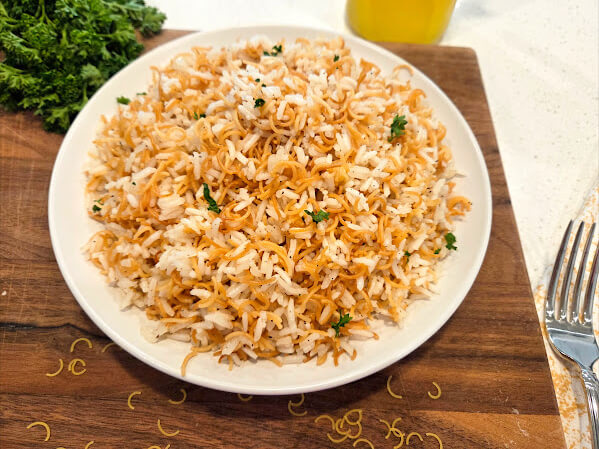
If you walk into any home in Cairo at lunchtime, there is one comforting aroma you are almost guaranteed to encounter: the rich, nutty smell of vermicelli noodles toasting in a hot pot of butter. This is the scent of Roz Bel Shariya (Egyptian Rice with Vermicelli), and today I am sharing the authentic, fluffy Egyptian rice with vermicelli recipe that serves as the undisputed backbone of Egyptian home cooking.
Growing up in Egypt, this wasn’t just a side dish—it was a daily ritual. My mother made a fresh pot of Roz Bel Shariya almost every single afternoon. In Egyptian culture, rice isn’t just an afterthought thrown next to a protein; it is the ultimate comfort food designed to soak up the savory sauces of traditional stews like Molokhia, Bamya (okra stew), or a rich Egyptian potato and beef casserole.
What makes traditional Egyptian rice so incredibly special is the technique. Unlike standard boiled white rice, we toast tiny fragments of vermicelli pasta until they reach a deep, reddish-golden brown before tossing in the rice grains. This short, simple step infuses the entire dish with a toasted, nutty flavor profile that elevates a few pantry staples into a masterpiece.
Whether you are serving a formal Mediterranean feast or a quick weeknight dinner, learning how to master this fluffy, perfectly separated Egyptian classic will completely transform how you look at a humble bowl of rice.
What Is Egyptian Rice with Vermicelli (Roz Bel Shariya)?
Roz Bel Shariya is a beloved Egyptian comfort food that elevates white rice by toasting vermicelli noodles, creating a nutty flavor and perfect, fluffy texture. This method guarantees a distinct, non-gummy, and fragrant side dish by coating the grains in oil and utilizing a precise water-to-rice ratio.
What You’ll Need for Perfect Roz Bel Shariya
This traditional side dish relies on simple pantry staples, but the secret lies in choosing the right ingredients and using the correct proportions to ensure perfectly separated, fluffy grains every time.
- Long-Grain White Rice: While standard short-grain Egyptian rice is traditionally used in Cairo, standard long-grain white rice works beautifully to guarantee a light, non-sticky texture. Make sure to rinse it thoroughly under cold water until the water runs completely clear to remove excess starch.
- Vermicelli Noodles: These thin, delicate pasta strands are broken into small pieces before hitting the pan. They cook very quickly, absorbing the fat and providing that signature nutty contrast to the mild white rice.
- Olive Oil or Butter: I love using a high-quality extra virgin olive oil for a lighter Mediterranean touch, but traditional Egyptian households almost always use pure ghee or butter. A mix of both oil and butter gives you the best of both worlds—rich flavor and a high smoke point.
- Water or Chicken Broth: Cooking the rice in a rich, homemade chicken broth adds an incredible depth of savory flavor. If you want to keep the dish vegan and authentic to standard everyday meals, plain water with a pinch of salt works perfectly.
- Salt and Black Pepper: A clean, simple seasoning is all this rice needs. A heavy pinch of salt brings out the sweetness of the toasted pasta, while a touch of fine ground black pepper adds a subtle, warm depth without overpowering the main dish.
Yalla, Let’s Make It! Step-by-Step
Making this rice is super easy, but you have to stay on your toes! Grab your favorite medium-sized pot, put on some music, and let’s get cooking.
- Get That Deep Golden Brown
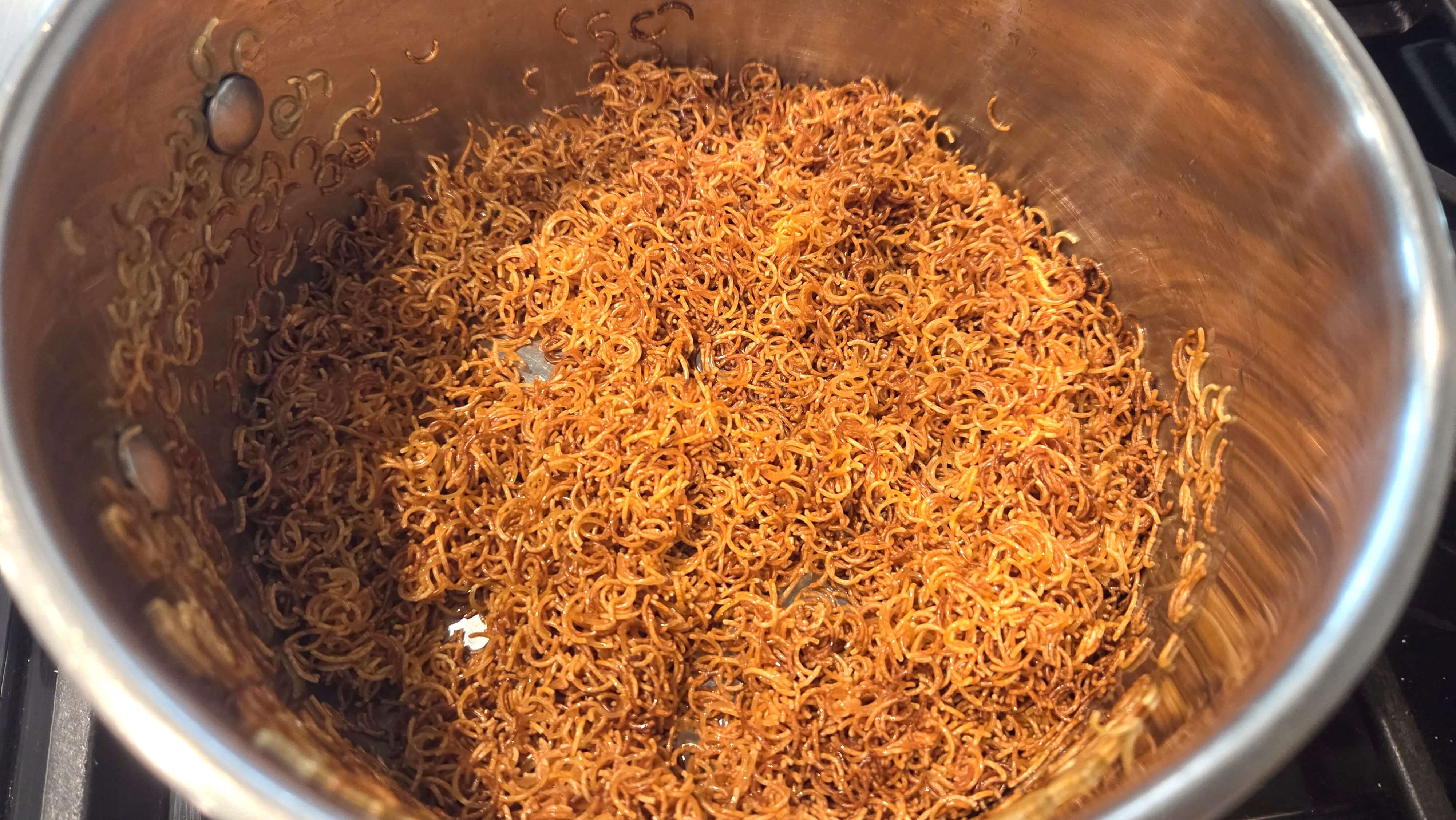
First things first, heat your oil (or a big dollop of ghee if you want it extra rich!) over medium heat. Drop in your (broken) vermicelli strands. Now, do not walk away! You need to stir these constantly. They go from perfect to burnt in a literal second. We are looking for a beautiful, rich copper-penny color.
- Toss and Coat the Grains
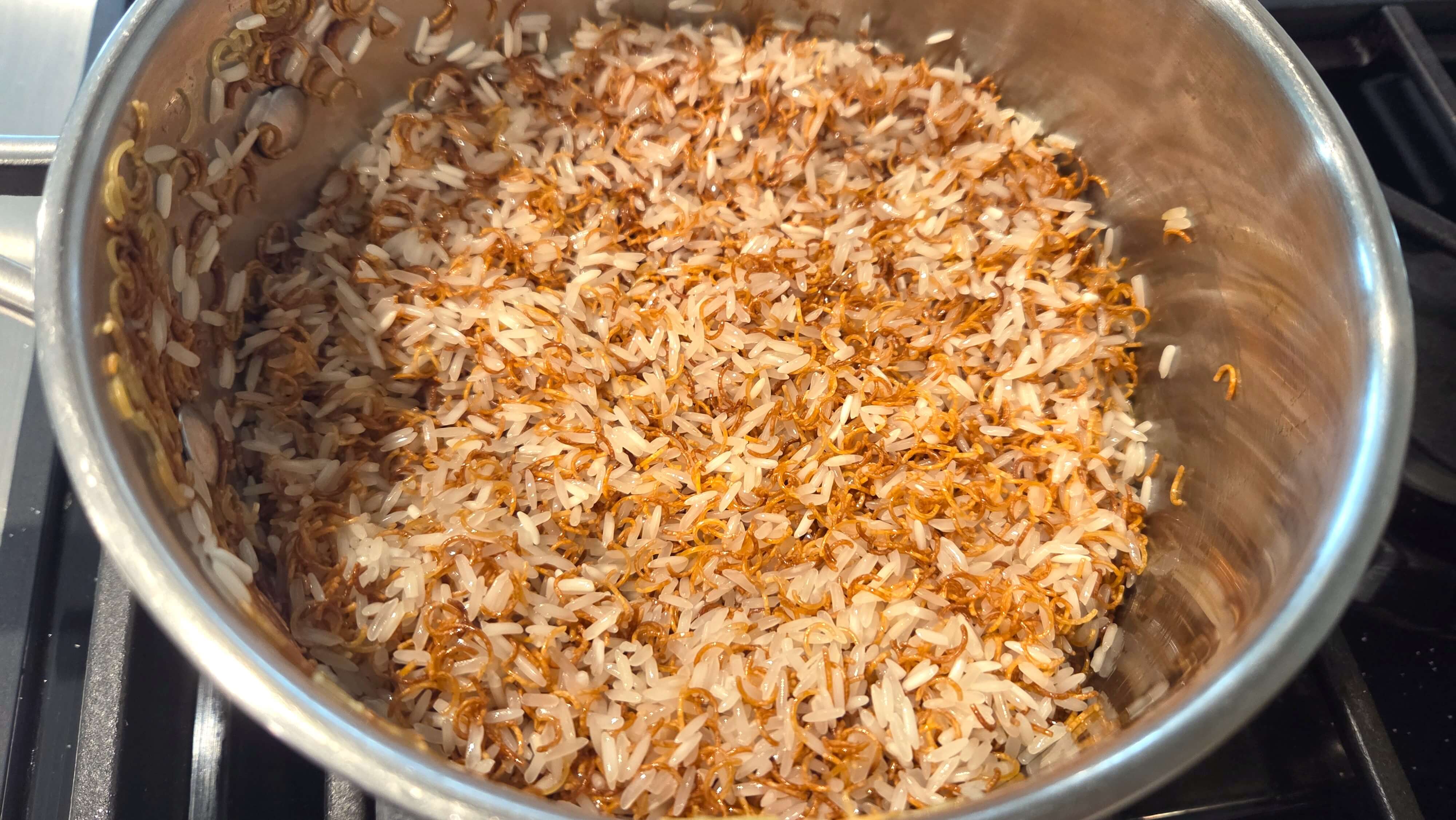
The exact moment your noodles look golden, dump in your rinsed and drained rice. You’ll hear a loud sizzle—that’s exactly what we want! Stir everything together gently for about a minute. We are letting the oil coat every single grain of rice. This is my mother’s golden rule for making sure the grains don’t stick together later.
- Pour the Liquid and Let It Dance
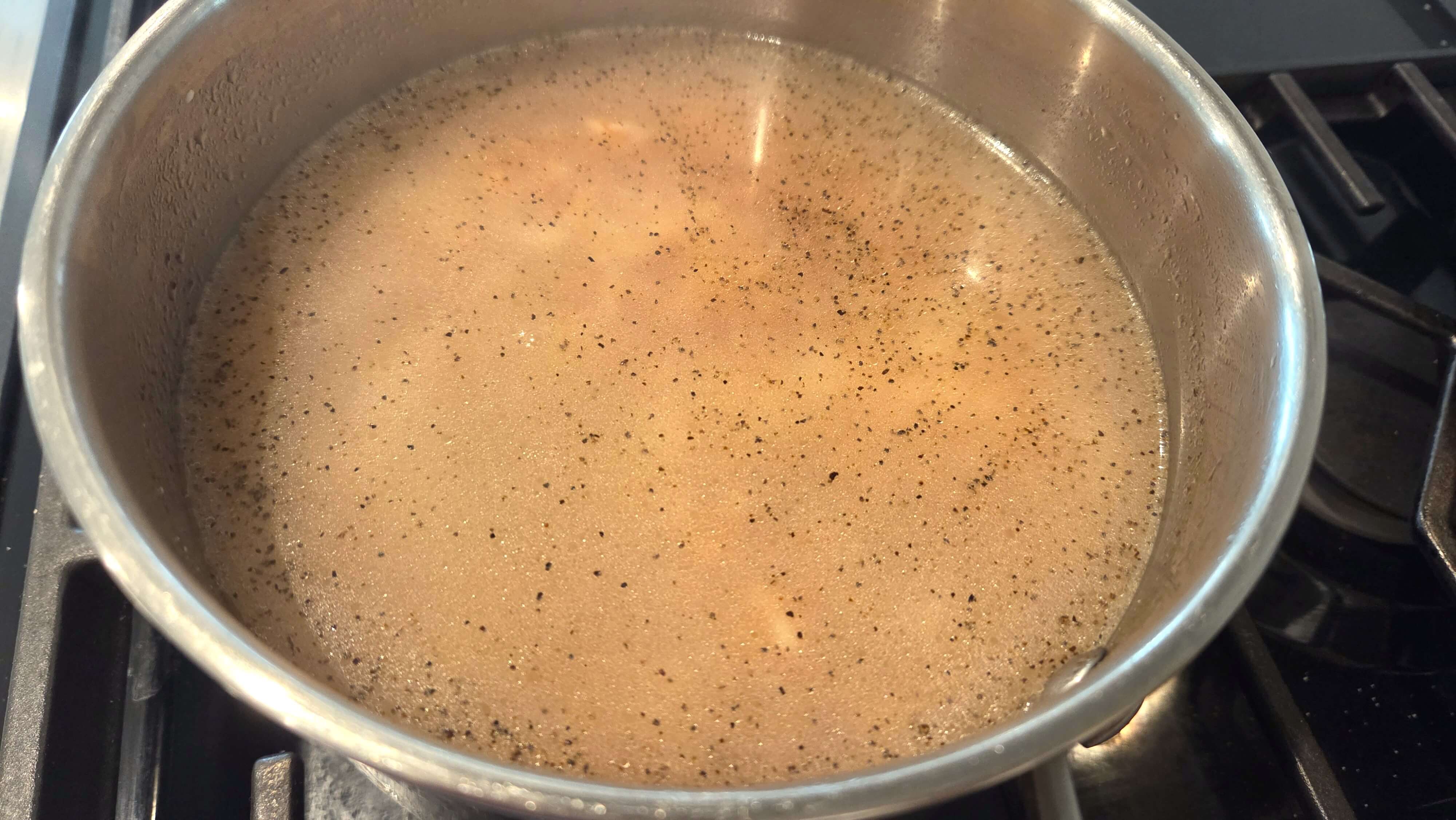
Pour in your water or chicken broth, and add your salt and pepper. Give it one quick stir to make sure no rice is stuck to the bottom of the pot. Bring the liquid to a rolling boil. You want to see big bubbles dancing across the surface.
- Lock It Down and Let It Steam
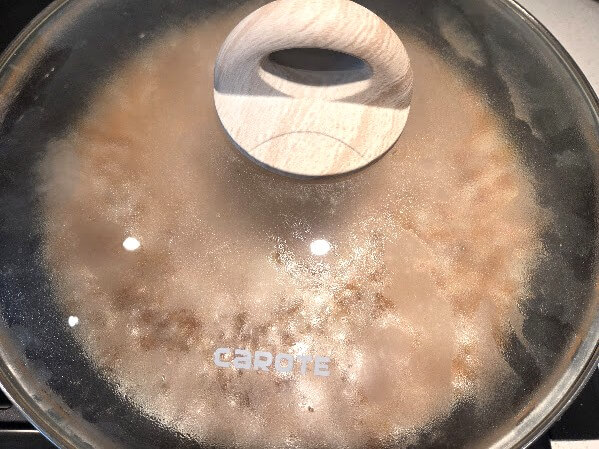
As soon as it boils, pop the lid on tightly and turn your stove burner down to the absolute lowest setting. Now, hands off! Do not lift that lid to peek, or you will let all the precious steam escape. Let it simmer completely undisturbed for 20 minutes.
- The Magic Rest Period
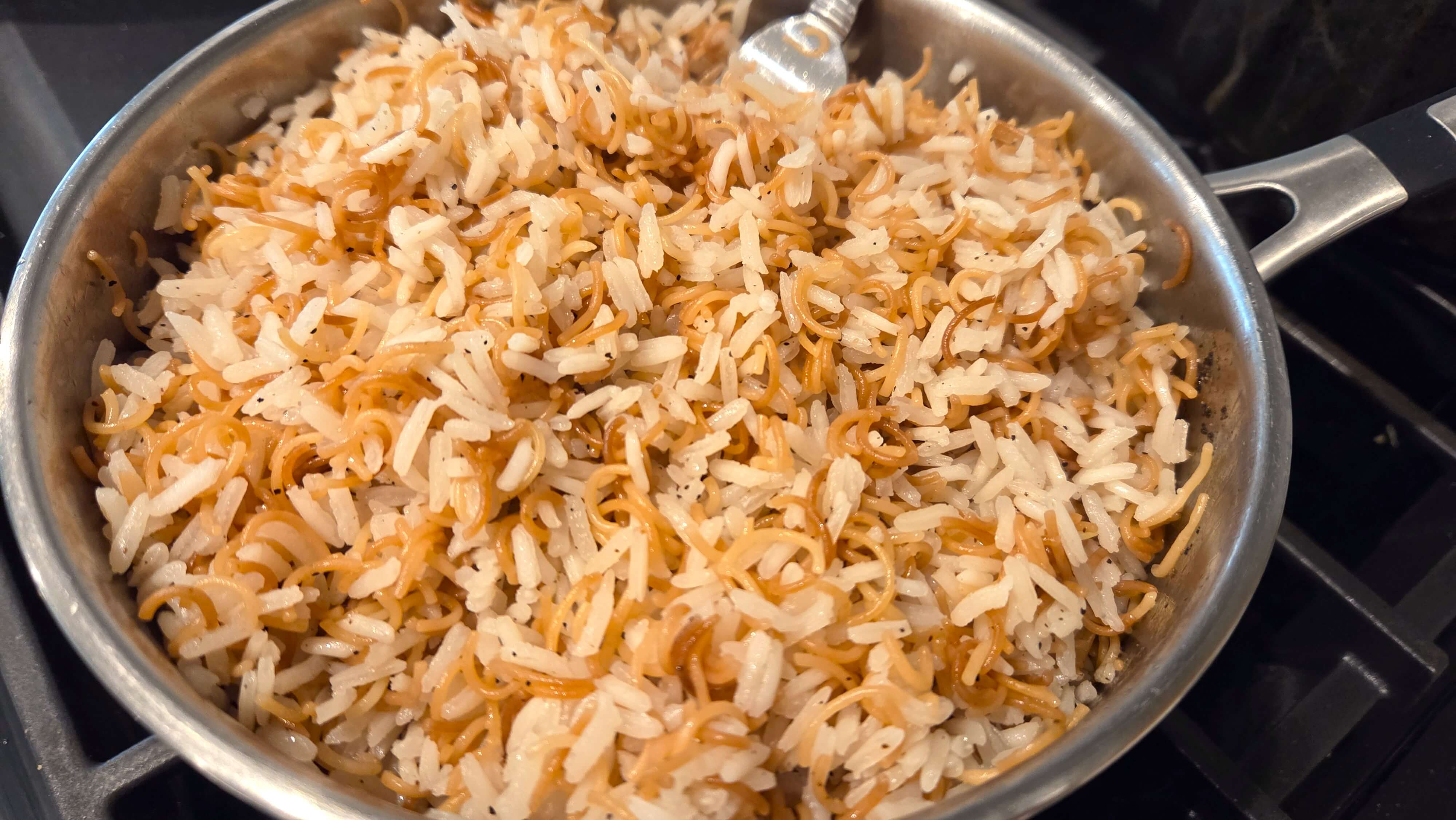
After 20 minutes, turn off the heat, but leave the pot exactly where it is. Keep that lid locked tight for another 10 minutes. This lets the steam settle back into the rice so it gets unbelievably fluffy. Finally, grab a fork, gently fluff the grains, and watch your beautiful Roz Bel Shariya fall apart perfectly!
My Tried-and-True Tips for Fluffy Rice Every Single Time
After making hundreds of pots of Roz Bel Shariya over the years, I’ve learned that achieving that picture-perfect, fluffy texture comes down to a few small, precise details. If your rice usually turns out sticky or unevenly cooked, implement these kitchen secrets:
- Stir Constantly During the Toasting Phase: Vermicelli noodles can turn from a gorgeous golden brown to burnt and bitter in a matter of seconds. Keep your spoon moving constantly over medium heat, and have your rinsed rice measured out right next to the stove so you can dump it into the pot the exact moment the noodles reach a rich copper color.
- The “Clear Water” Rinsing Rule: Don’t just give your rice a quick splash of water. Place it in a fine-mesh sieve and massage the grains under running cold water until the cloudy pool beneath turns completely crystal clear. This strips away the excess surface starch that causes grains to glue together during the steaming process.
- Lock the Lid and Put the Spoon Away: It is incredibly tempting to lift the lid and stir the rice while it simmers, but every time you do, you release the trapped steam and drop the internal temperature. Stirring also breaks the fragile grains, releasing starch and creating a gummy texture. Trust the heat and leave it completely alone for the full 20 minutes.
- The Crucial 10-Minute Rest Period: Turning off the stove burner is not the final step. Leave the lid tightly sealed and let the pot sit undisturbed on a cool surface for an extra 10 minutes. This allows the residual heat to distribute evenly throughout the pot, letting the trapped steam settle back into the grains so they separate effortlessly when fluffed.
Common Pitfalls to Watch Out For (And How to Fix Them)
Even simple recipes can go wrong if you rush the process. When making Egyptian rice with vermicelli (Roz Bel Shariya), avoiding these three common mistakes will save your dinner from turning into a sticky mess:
- Skipping the Final Rest Phase: Digging into the pot immediately after turning off the flame will give you wet, clumpy rice. The grains need those extra 5 to 10 minutes to firm up and absorb the final pockets of steam, which is what gives the dish its signature restaurant-quality separation.
- Letting the Vermicelli Cross into the “Burnt Zone”: Because these pasta strands are so thin, they hold onto residual pan heat. If you wait until they look dark brown in the oil, they will burn the second you add the water, leaving your entire pot of rice tasting bitter. Pull them off or drop the rice in when they hit a warm, shiny copper penny color.
- Miscalculating the Liquid Volume: Using too much liquid or failing to adjust your heat to a true low simmer will drown the rice grains. If you notice a pool of water still sitting on top after 20 minutes, don’t stir it. Take the lid off, turn the heat down to low, and let the extra moisture evaporate naturally for 3 to 4 minutes.
Simple Ways to Put a Custom Twist on Your Rice
While the classic salt-and-pepper version is a daily staple in Cairo, you can easily dress up this dish to match whatever Mediterranean main course you are serving:
- The Rich Holiday Style (Ghee & Broth): Swap out the olive oil for authentic clarified butter (ghee) and replace the water with a rich, low-sodium chicken or beef stock. This transforms the dish into a deeply savory, aromatic base perfect for a special Sunday roast or family gathering.
- The Warm Aromatic Twist: If you are serving your rice alongside grilled lamb or a spicy stew, stir a tiny pinch of ground cinnamon, a crushed cardamom pod, or a single bay leaf directly into the hot fat right before you add the liquid. The heat will bring out the spices, perfuming the entire house.
- The Feast Topping (Nuts & Herbs): To give your side dish a beautiful texture contrast, pan-fry a handful of slivered almonds or pine nuts in a teaspoon of butter until golden brown. Scatter them across the top of the fluffy rice right before serving, alongside a generous shower of finely minced fresh flat-leaf parsley.
What to Serve with Egyptian Vermicelli Rice
Because Roz Bel Shariya features a subtle, toasted nuttiness, it acts as the ultimate culinary canvas. In Egypt, we use this fluffy rice to soak up bold, savory sauces rather than serving it completely dry.
- Traditional Egyptian Mains: Pair this rice with authentic, saucy comfort foods like Egyptian Moussaka (eggplant bake), Egyptian Molokhia (jute leaf soup), or a rich, slow-simmered Egyptian Kabab Halla (beef stew)
- Grilled Mediterranean Proteins: It makes the perfect bed for smoky meats straight off the fire, especially Middle Eastern Chicken Kebabs (Shish Tawook), Mediterranean grilled lamb chops, or roasted lemon-herb chicken.
- Vegetarian & Vegan Sides: For a lighter, plant-based dinner, serve it alongside crispy homemade Egyptian Falafel (Taameya), a hearty Egyptian potato stew, or a mountain of roasted Mediterranean vegetables.
- Fresh Accompaniments: Balance the warmth of the meal by adding a side of crisp Mediterranean cucumber tomato salad, a generous scoop of creamy hummus, and warm pita bread.
How to Store and Reheat Vermicelli Rice
Leftover vermicelli rice stores beautifully and tastes just as delicious the next day if you preserve its moisture.
- Cooling & Storage: Let the rice drop to room temperature completely before transferring it into an airtight container. Keeping it sealed tight prevents the grains from drying out in the fridge.
- Refrigeration Timeline: Store your leftover rice in the refrigerator and enjoy it within 4 days.
- The Microwave Reheat Method: Place your desired portion into a microwave-safe bowl and splash exactly one tablespoon of water over the top. Cover the bowl loosely with a paper towel and microwave on high for 1 to 2 minutes, steaming the grains back to life.
- The Stovetop Reheat Method: Transfer the rice into a small pot, add a splash of chicken broth or water, and drop in a tiny pat of butter. Cover tightly with a lid and heat over a very low flame for 4 to 5 minutes, shaking the pan occasionally.
- The Golden Rule: Always fluff your reheated rice gently with a fork right before serving to restore that light, fluffy restaurant texture.
Commonly Asked Questions About Roz Bel Shariya
Yes! While short-grain Egyptian rice is the absolute gold standard for texture in Cairo, long-grain white rice or Jasmine rice work beautifully as substitutes. Just ensure you stick to the exact water-to-rice ratios listed in the recipe card, as basmati absorbs liquid a bit differently than short-grain varieties.
Because vermicelli pasta is incredibly thin, it can overcook in a matter of seconds. If the noodles cross over from a rich copper penny color into a dark brown, the heat has scorched them. If this happens, it is best to throw them out and start over, as that burnt bitterness will ruin the flavor of the entire pot of rice.
Traditional vermicelli is made from wheat flour, which means this classic version contains gluten. However, you can easily make it gluten-free by swapping out the standard pasta strands for broken-up gluten-free vermicelli or thin rice noodles (like those used in Asian cooking). The toasting method remains exactly the same.
Sticky rice usually happens if you forgot to rinse away the surface starch or if you added too much liquid. If your rice finishes cooking and looks gummy, do not stir it! Take the lid completely off, leave the heat on the absolute lowest setting, and let the excess moisture evaporate out of the pot naturally for about 5 minutes.
Authentic Egyptian Rice with Vermicelli Recipe Card
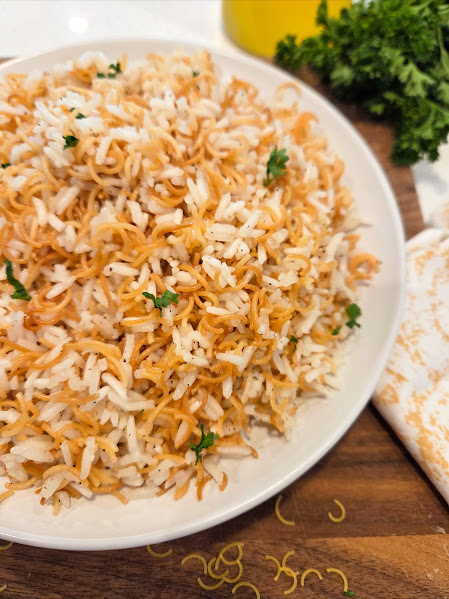
Fluffy Egyptian Rice with Vermicelli
Ingredients
Equipment
Method
- Rinse the Starch Away: Place your long-grain white rice into a fine-mesh strainer and massage the grains under cold running water. Keep rinsing until the water running out of the bottom shifts from cloudy to completely crystal clear. Set the strainer over a bowl to drain out all excess moisture.
- Toast the Vermicelli: Set a medium saucepan over medium heat and warm up your olive oil (or melt a generous dollop of ghee). Drop the broken vermicelli noodles directly into the hot oil. Stir constantly with a wooden spoon for 2 to 3 minutes, making sure the pasta doesn't catch on the bottom, until the strands turn an even, rich copper-penny brown.
- Toss and Coat the Rice: The exact moment the vermicelli hits that perfect golden-brown shade, dump your drained rice into the pan. You should hear a loud, satisfying sizzle. Stir gently for about 60 seconds to completely coat every single rice grain in the warm oil—this is the secret trick that keeps the grains from sticking together later.
- Bring to a Rolling Boil: Pour your hot water or chicken broth over the rice and noodles, then stir in your salt and black pepper. Give it one quick mix to make sure no grains are stuck to the bottom of the pot. Turn the heat up to high and let the liquid come to a full, rolling boil with big bubbles dancing across the surface.
- Lock It and Simmer: As soon as the water boils, snap a tight-fitting lid onto the saucepan and immediately drop the stove burner down to your absolute lowest setting. Set a timer for 20 minutes and do not lift the lid to peek, or you will release the trapped steam that is actively cooking the rice.
- The Magic Rest Period: After 20 minutes, turn the heat off completely, but leave the pot sitting exactly where it is. Keep that lid sealed tight for an additional 10 minutes to let the residual steam finish settling into the grains. Finally, remove the lid, grab a fork to gently fluff the mixture, and serve your perfectly separated, fluffy Roz Bel Shariya hot.
Notes
- For a Richer Flavor: To make a traditional holiday-style dish, use authentic clarified butter (ghee) instead of olive oil, and simmer the grains in a rich low-sodium chicken broth.
- Troubleshooting Sticky Rice: If your rice looks gummy, do not stir it. Take the lid off and let the extra pot moisture evaporate on the lowest setting for 3 minutes.
- The Perfect Separation: Never skip the 10-minute rest period. Keeping the lid sealed traps the residual steam, which is the secret to getting perfectly separated grains.
Bring the Tastes of Cairo into Your Kitchen
Mastering a pot of perfectly fluffy Egyptian Rice with Vermicelli (Roz Bel Shariya) is one of the most rewarding milestones in learning Mediterranean and Middle Eastern cooking. It takes just a handful of incredibly humble ingredients, but the careful technique of toasting the pasta transforms it into an aromatic side dish that outshines the main course. Once you smell that nutty vermicelli sizzling in the pan, you’ll understand exactly why this dish is the heart of every Egyptian home.
I would absolutely love to see how your rice turns out! If you cook a pot of this classic side dish, please leave a comment down below and give the recipe a star rating in the card. What are you planning to serve alongside your rice tonight?
More Recipes to Try
- Easy Baked Sweet Potato Recipe
- Easy Zucchini and Cherry Tomato Pasta Recipe
- Egyptian Mahalabia Recipe

- Authentic Egyptian Molokhia Recipe
- Easy No Mayo Mediterranean Tuna Salad Recipe
- Mediterranean Grilled Lamb Chops Recipe
- Vegan Basbousa Recipe
- Mediterranean Spicy Honey Garlic Chicken Bites Recipe
- Easy Turkish Beef Kofte Recipe
Just made a perfect vermicelli rice following your recipe 👍 thank you . I am serving it with baked chicken and salad