Easy Qamar Al Din Pudding
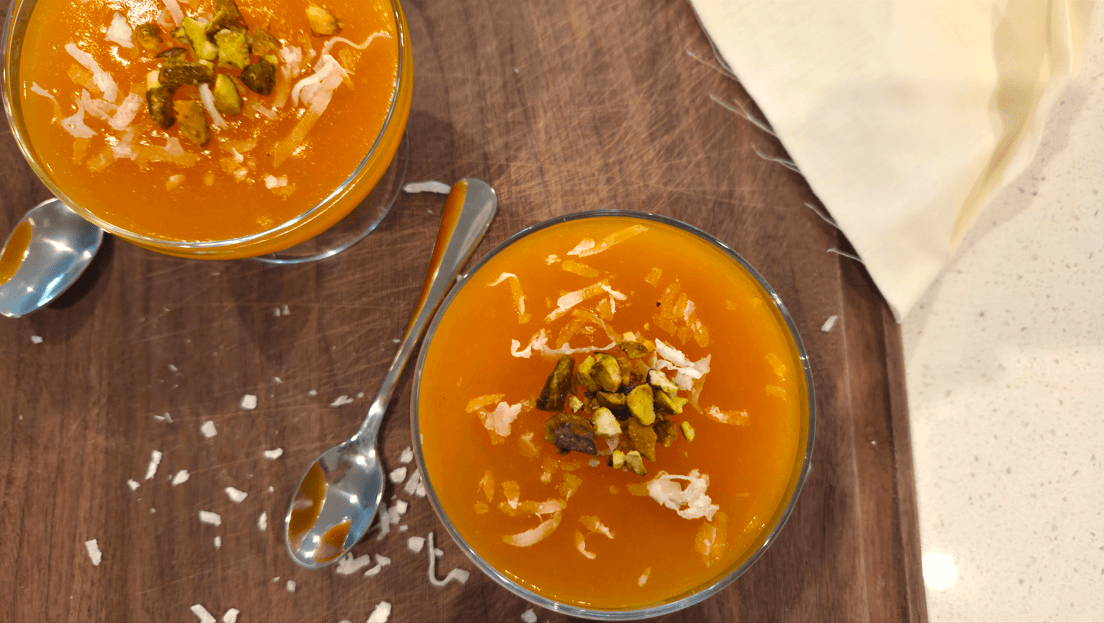
If you grew up in Egypt like I did, the sight of those bright orange apricot leather sheets hitting the shelves meant one thing: Ramadan was here! Qamar Al Din pudding, or Meshmesheya as we lovingly call it back home, is one of my favorite traditional Egyptian desserts. Made with sweet-tart Qamar Al Din apricot sheets, this chilled pudding has a beautifully silky texture and is naturally vegan. Today, I’m sharing my family’s simple method, including a time-saving shortcut that means no overnight soaking is needed.
What Is Qamar Al Din Pudding?
If you’re new to Egyptian desserts, Qamar Al Din pudding is a silky, chilled apricot dessert made from Qamar Al Din, a traditional dried apricot fruit leather sold in bright orange sheets. Also known as Meshmesheya or Mhallabiyeh Amardeen, this simple dessert has a naturally sweet-tart flavor and is completely dairy-free and vegan.
Growing up in Cairo, Qamar Al Din always reminded me of Ramadan. The bright orange apricot sheets were a familiar sight during the season, and turning them into a refreshing pudding was one of the simplest ways to enjoy their sweet-tart flavor.
The name Qamar Al Din is commonly translated as “moon of the religion,” although several stories are told about how the name originated. Whatever its exact history, Qamar Al Din has become a beloved part of Ramadan traditions across the region.
Why You’ll Love This Qamar Al Din Pudding
This Qamar Al Din pudding is one of those simple Egyptian desserts that delivers incredible flavor with very little effort. Made with just four main ingredients, it transforms sweet-tart Qamar Al Din apricot sheets into a silky, refreshing pudding on the stovetop—no oven or overnight soaking required.
- Just 4 Main Ingredients: Qamar Al Din sheets, water, sugar, and cornstarch are all you need for the pudding base.
- No Overnight Soaking: Chopping the apricot sheets into small pieces allows them to dissolve in hot water in about 10 minutes.
- Naturally Vegan & Dairy-Free: There’s no milk, cream, butter, or eggs in this fruit-based dessert.
- No-Bake & Stovetop-Friendly: Everything comes together in one saucepan, making it an easy dessert for warm days or busy Ramadan cooking.
- A Taste of Egypt: The sweet-tart flavor of Qamar Al Din makes this a nostalgic Egyptian dessert, especially popular during Ramadan.
- Easy to Make Ahead: Once chilled, the pudding is ready to serve straight from the refrigerator, making it convenient for entertaining and family gatherings.
What You Need to Make Meshmesheya
You only need a few simple ingredients to make this Qamar Al Din pudding. The star is Qamar Al Din, a traditional dried apricot fruit leather that gives this Egyptian dessert its beautiful orange color and naturally sweet-tart flavor.
- Qamar Al Din (apricot leather sheets): The key ingredient in this recipe. Look for a 400-gram package of thick, bright orange apricot sheets. Chop them into small pieces so they dissolve quickly in hot water.
- Cold water: You’ll use water to soften and dissolve the Qamar Al Din sheets and to make the cornstarch slurry.
- Cornstarch: This thickens the apricot mixture and gives the pudding its smooth, spoonable texture.
- Granulated sugar: Add sugar to taste to balance the natural tartness of the apricots. The sweetness can vary between brands of Qamar Al Din.
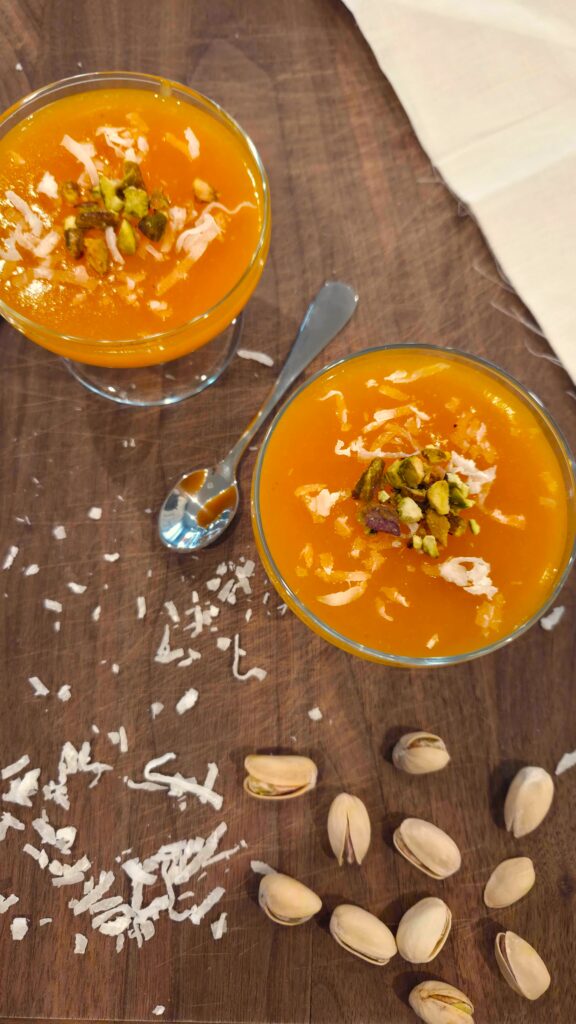
- Optional toppings: Crushed pistachios, sliced almonds, shredded coconut, and raisins make simple, traditional-style garnishes for serving.
Where to Buy Qamar Al Din Sheets in the US
Qamar Al Din apricot sheets are usually available at Middle Eastern, Mediterranean, Turkish, and halal grocery stores, especially during Ramadan. If you don’t have a specialty market nearby, you can also find them online. Look for a 400-gram package of Qamar Al Din apricot sheets for this recipe.
- Middle Eastern & Mediterranean markets: Check the dried fruit, Ramadan foods, or dessert sections of local specialty grocery stores.
- Online: Qamar Al Din sheets are also available from online retailers and specialty Middle Eastern food stores.
Shopping tip: Choose Qamar Al Din sheets that are deep orange, slightly pliable, and not excessively dry or stiff. Very dark, brittle sheets may be older and can be more difficult to dissolve.
How to Make Qamar Al Din Pudding Step-by-Step
Making this traditional Egyptian dessert is simple and requires no overnight soaking. My stovetop method softens the Qamar Al Din apricot sheets in about 10 minutes before thickening them into a smooth, chilled pudding.
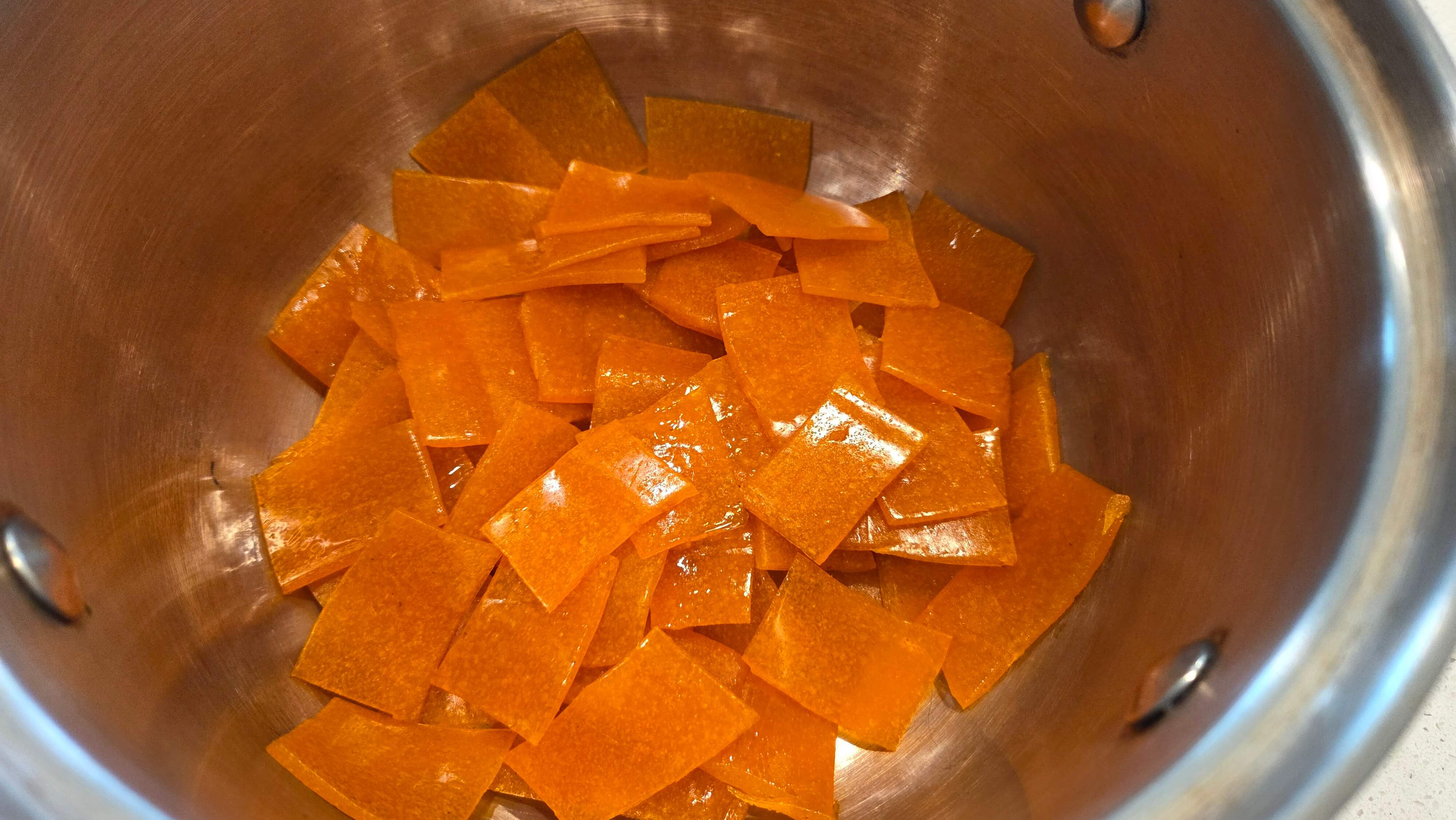
- Chop the Qamar Al Din sheets
Cut 400 grams of Qamar Al Din apricot sheets into small pieces and add them to a medium saucepan.
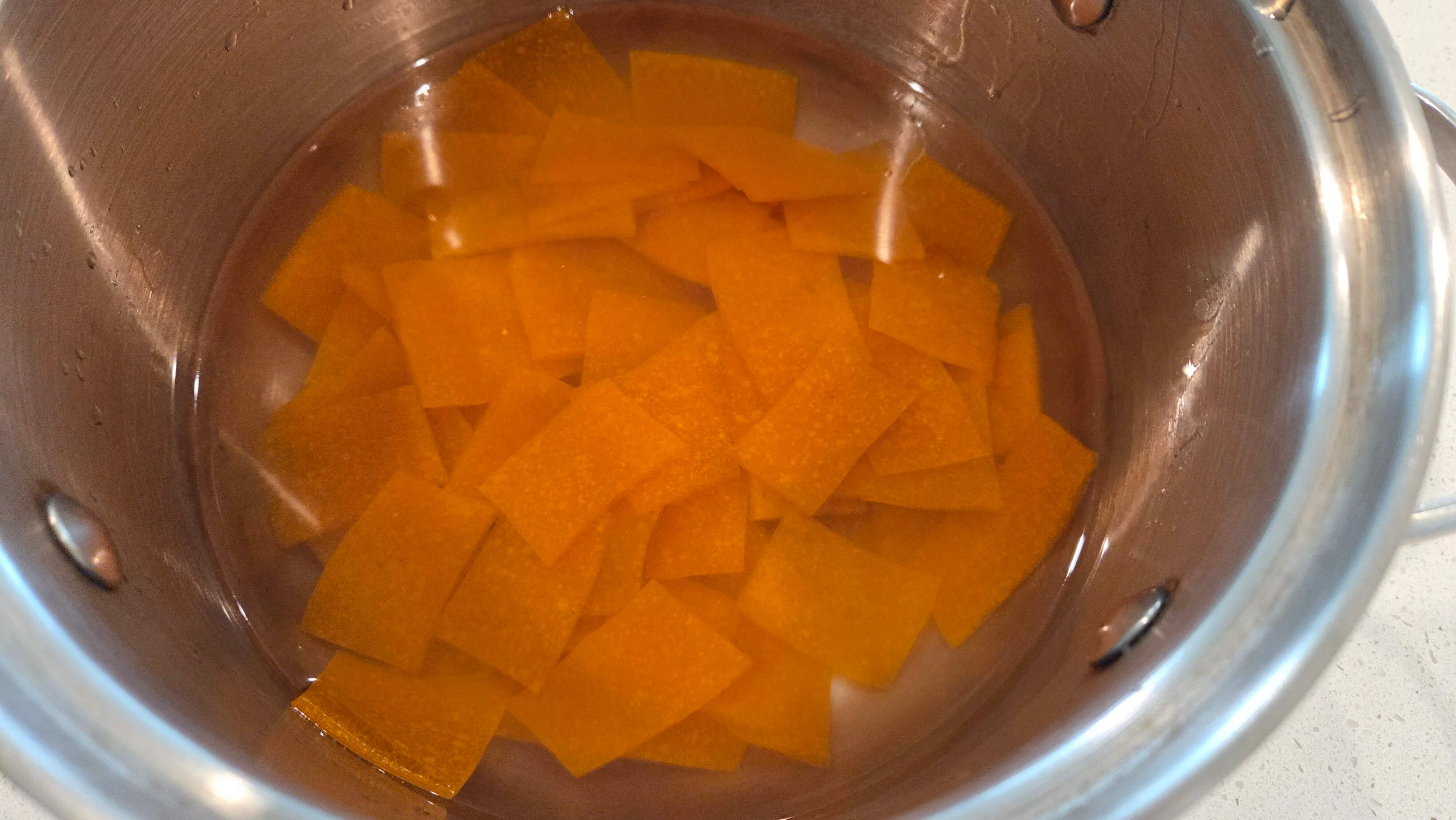
- Dissolve the apricot sheets
Add 4 cups of water and simmer over medium heat for about 10 minutes, stirring frequently, until the sheets completely dissolve. Blend briefly with an immersion blender if needed.
- Sweeten the apricot mixture
Stir in 4 tablespoons of granulated sugar until dissolved. Taste and adjust the sweetness if desired.
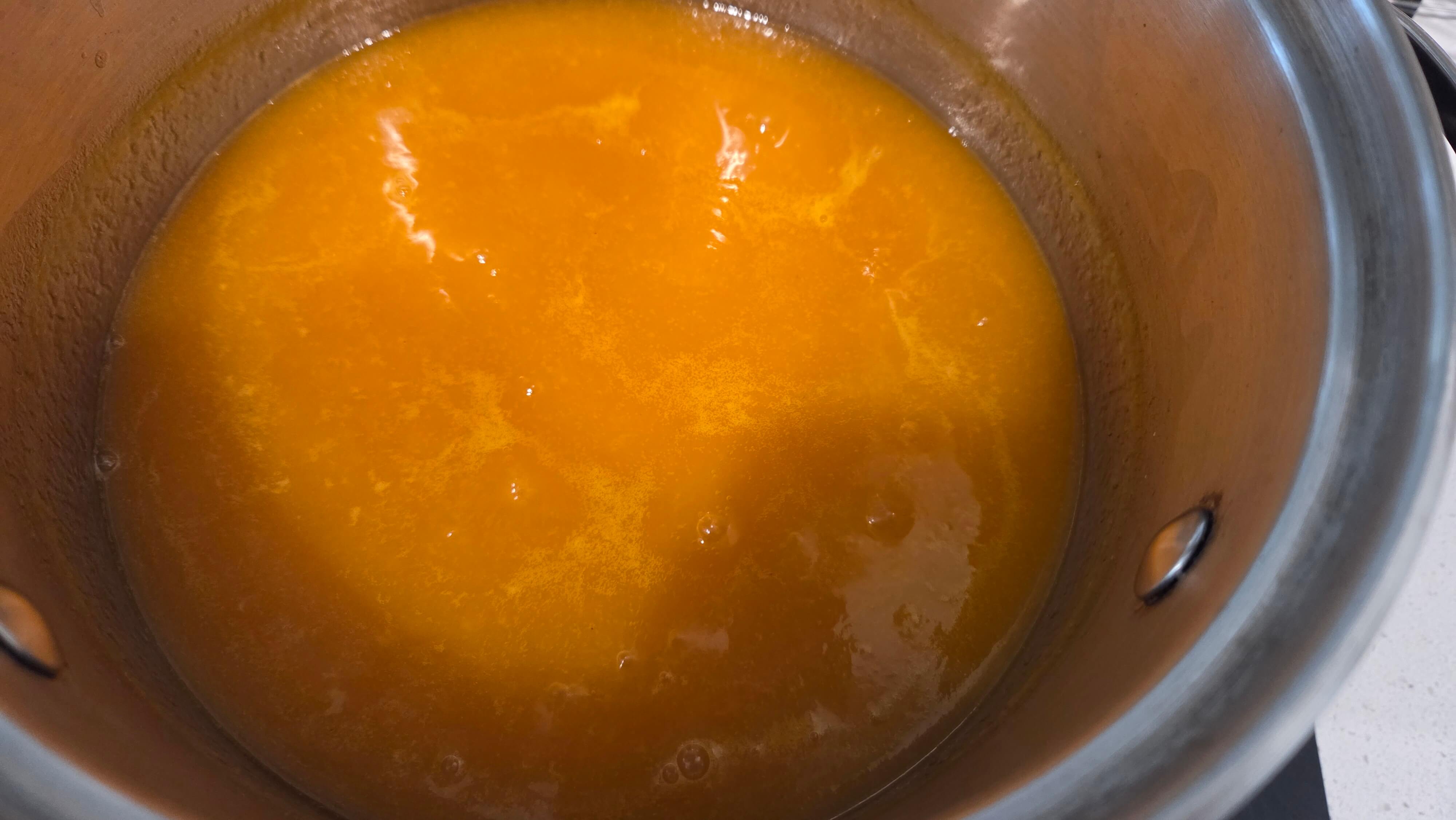
- Make the cornstarch slurry
Whisk 5 tablespoons of cornstarch with the remaining 1 cup of cold water until completely smooth.
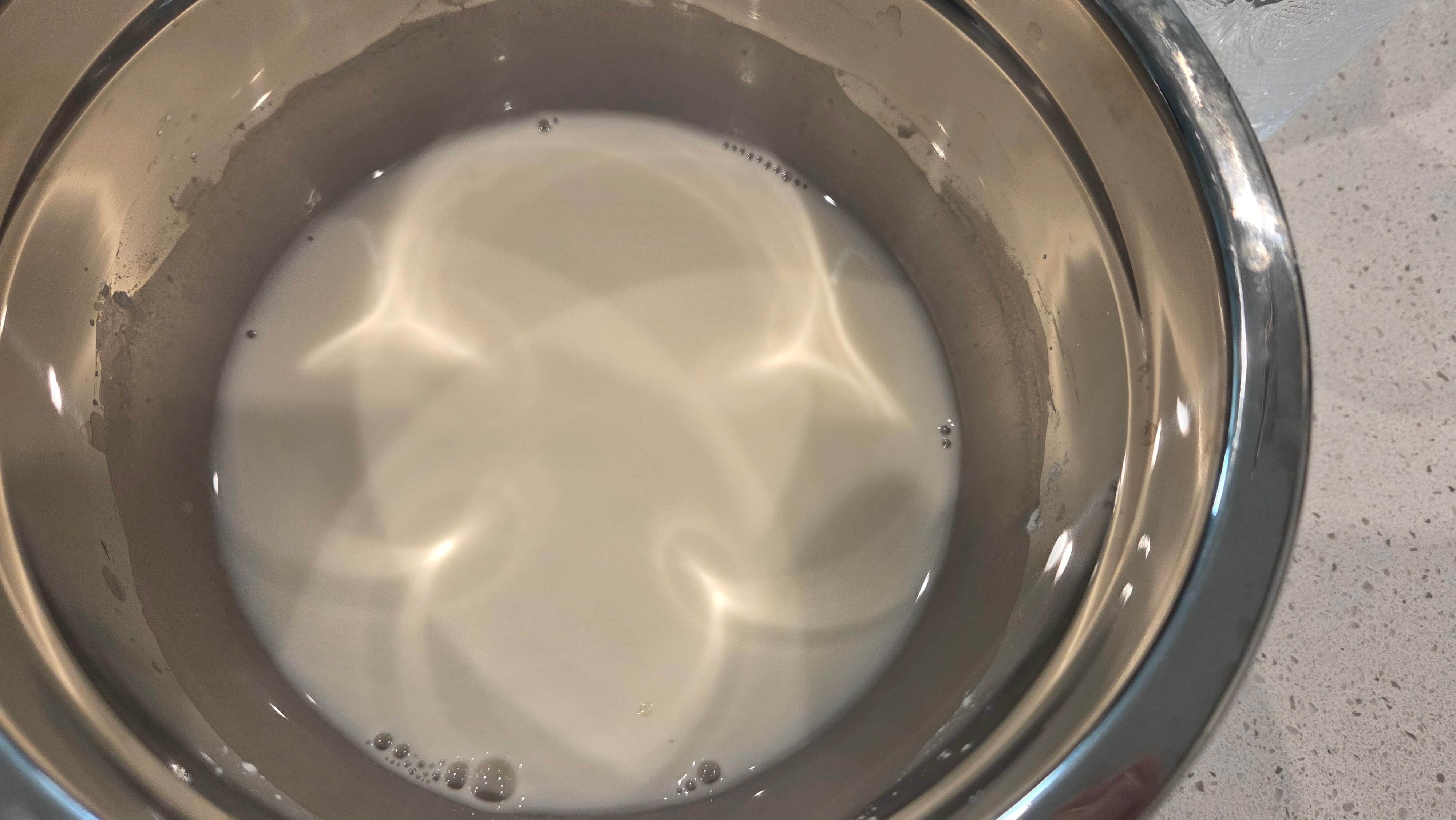
- Thicken the pudding
Slowly whisk the cornstarch slurry into the hot apricot mixture. Continue cooking over medium heat for about 5 minutes, whisking constantly, until thick and smooth.
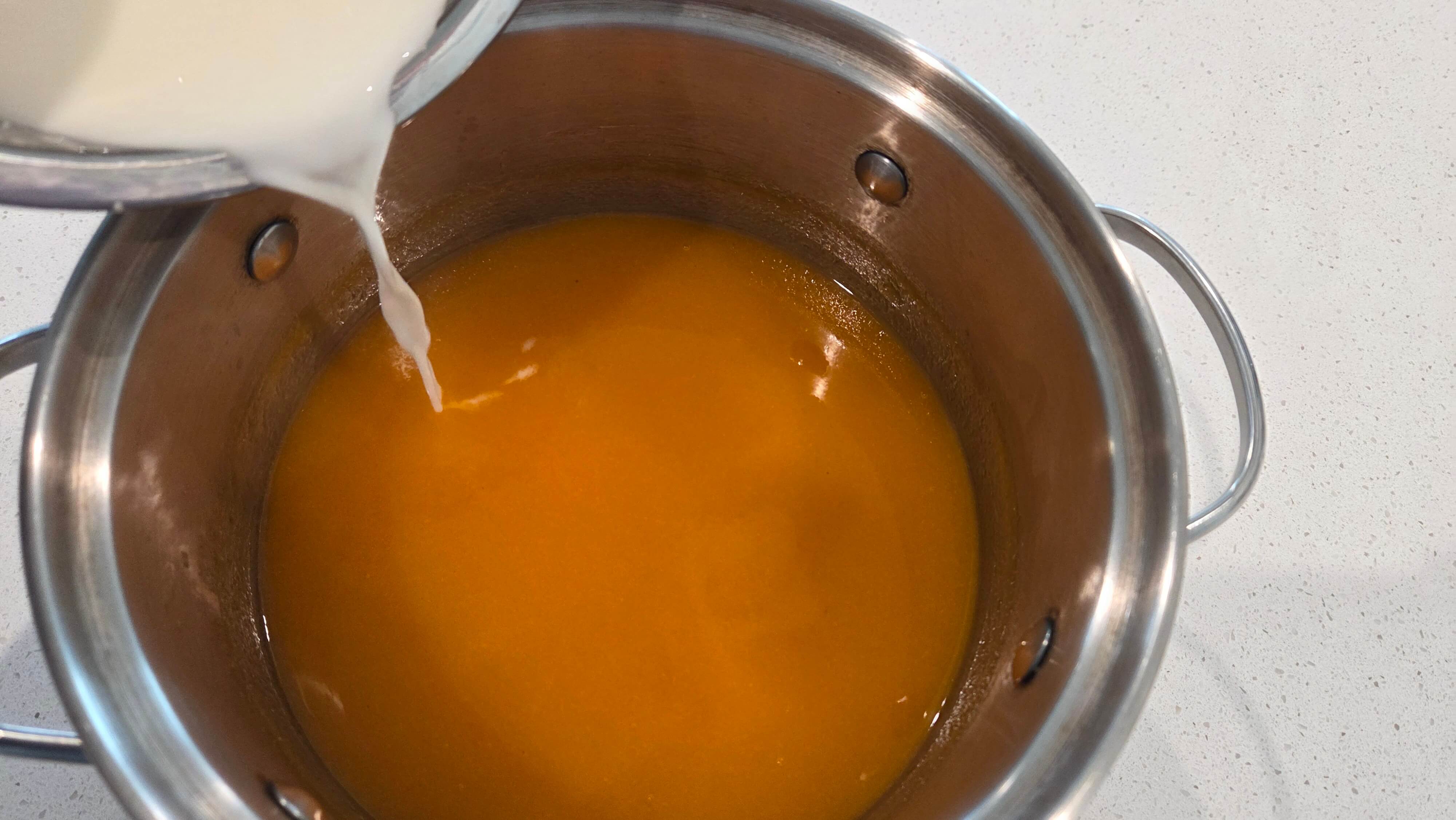
- Chill and garnish
Pour into individual serving bowls, cool to room temperature, cover with plastic wrap, and refrigerate for at least 2 hours, or until set. Garnish with pistachios, almonds, coconut, and/or raisins before servin
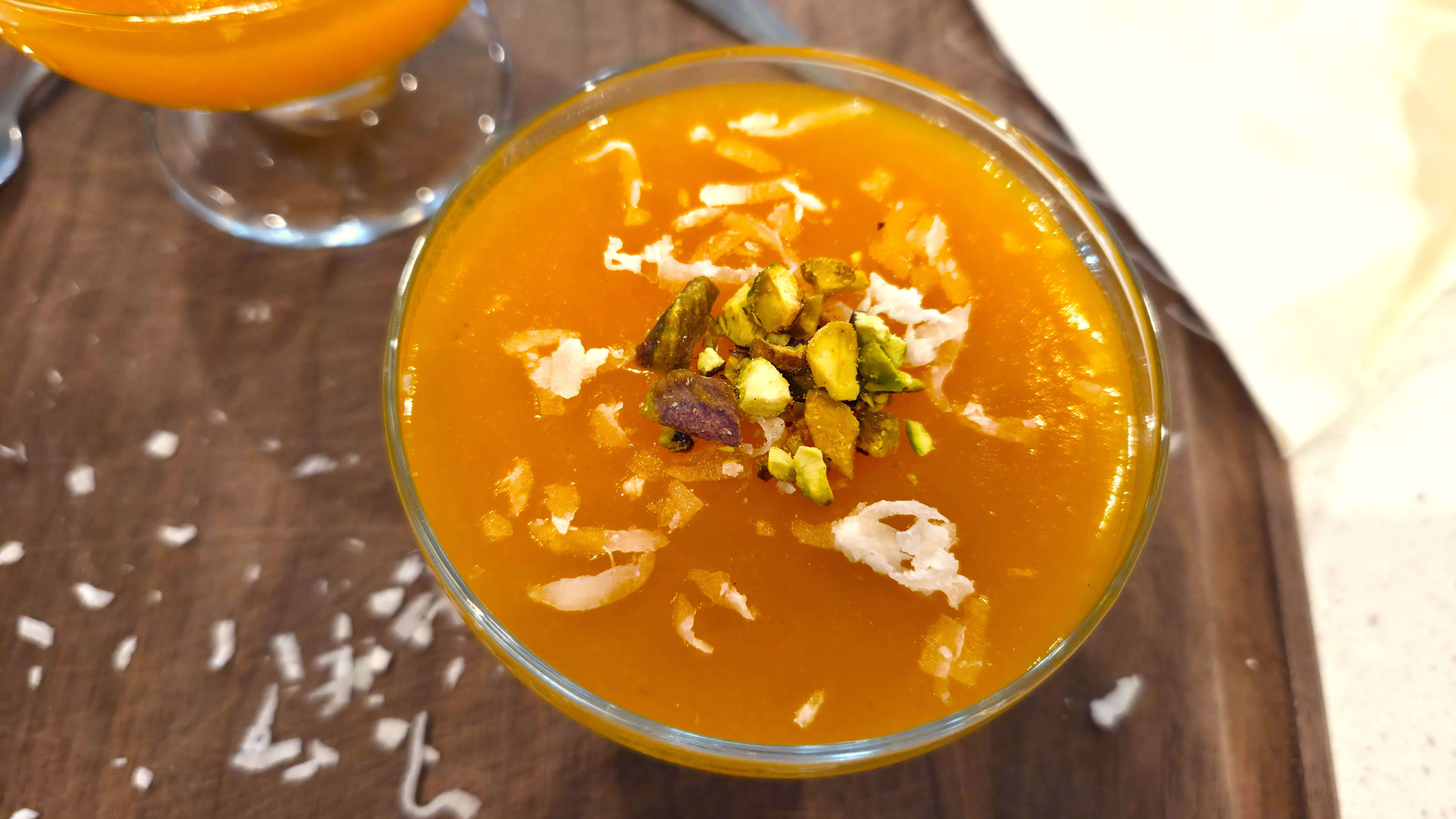
Tips for the Best Qamar Al Din Pudding
A few simple tricks will help you get a smooth, silky texture every time, especially if this is your first time working with Qamar Al Din apricot sheets.
- Blend if needed: If a few pieces of apricot sheet remain after simmering, use an immersion blender briefly until the mixture is completely smooth before adding the cornstarch slurry.
- Use cold water for the slurry: Always whisk the cornstarch with cold water until completely smooth before adding it to the hot apricot mixture. This helps prevent lumps.
- Adjust the sweetness: Qamar Al Din sheets can vary in sweetness between brands. Taste the dissolved apricot mixture before adding the sugar and adjust to your preference.
- Whisk while thickening: Once you add the cornstarch slurry, whisk continuously over medium heat for about 5 minutes. This helps create a smooth, evenly thickened pudding.
- Cover to prevent a skin: For a completely smooth surface, press plastic wrap directly onto the pudding while it cools, then refrigerate until set.
Qamar Al Din Pudding Substitutes
Can’t find Qamar Al Din apricot sheets? You can still make a similar apricot pudding using a couple of easy alternatives. The flavor and texture will vary slightly from the traditional version, but these options work when Qamar Al Din isn’t available.
- Apricot nectar: Replace the Qamar Al Din sheets and the 4 cups of simmering water with 4 cups of apricot nectar. Since nectar is usually sweetened, taste it before adding the sugar and add only as much as needed.
- Dried apricots: Use 400 grams of dried apricots. Simmer them in 4 cups of water for about 20 minutes, or until very soft. Blend until smooth, then continue with the sugar and cornstarch slurry as directed.
Easy Ways to Customize Meshmesheya
Want to change up the presentation or add a little extra flavor? Try one of these simple variations:
- Make it a layered dessert: For a two-layer pudding, prepare a half batch of Egyptian Mahalabia and spoon it into serving cups. Chill for about 1 hour, then carefully add the warm Qamar Al Din pudding on top. Refrigerate until completely set.
- Add floral flavor: For a subtle Middle Eastern flavor, stir 1 teaspoon of orange blossom water or rose water into the pudding at the end of cooking. Start with a small amount, as both flavors can be quite strong.
What to Serve with Qamar Al Din pudding
This chilled Egyptian apricot pudding is naturally sweet-tart and refreshing, making it a lovely addition to a dessert spread. Serve it alongside other Egyptian favorites or a simple cup of tea for a traditional finish to your meal.
- Egyptian Mahalabia: The creamy, milk-based texture of Mahalabia makes a beautiful contrast to the bright, fruity flavor of Qamar Al Din pudding. You can even serve both together for a layered dessert spread.
- Egyptian Rice Pudding: The creamy, comforting texture of Egyptian rice pudding pairs nicely with the refreshing tartness of the apricot pudding.
- Mint Tea: A warm cup of mint tea balances the chilled dessert and makes a simple, refreshing way to finish the meal.
- Coffee: For a richer pairing, serve the pudding with Arabic-style coffee or your favorite strong coffee. The slight bitterness complements the sweet-tart apricot flavor.
How to Store Qamar Al Din Pudding
Qamar Al Din pudding is best served chilled and can be made ahead for an easy dessert. Once prepared, store any leftovers covered in the refrigerator.
- Refrigerator: Cover each serving bowl with plastic wrap or a lid and refrigerate for up to 4 days. For the smoothest surface, press the plastic wrap directly onto the pudding to help prevent a skin from forming.
- Freezing: I recommend not freezing this pudding. Cornstarch-thickened desserts can become watery or change texture after freezing and thawing, so refrigeration is the best option.
- Serving: This pudding is meant to be enjoyed chilled, straight from the refrigerator. There is no need to reheat it.
Frequently Asked Questions
Yes. This Qamar Al Din pudding is naturally vegan and dairy-free because it contains no milk, cream, butter, or eggs. Cornstarch is used as the thickener instead of flour, making the pudding naturally gluten-free as long as your cornstarch is certified gluten-free if cross-contact is a concern.
Yes. The amount of sugar can be adjusted to taste because Qamar Al Din sheets vary in sweetness between brands. If you want to use a different sweetener, add it gradually and taste the apricot mixture before adding more.
The most common reason is that the cornstarch mixture wasn’t cooked long enough after being added to the hot apricot base. Whisk the cold-water cornstarch slurry into the hot mixture, then continue cooking over medium heat for about 5 minutes while whisking constantly, until the pudding becomes noticeably thick and smooth.
Refrigerate the pudding for at least 2 hours, or until fully chilled and set. For the best results, you can prepare it ahead of time and refrigerate it overnight.
Yes. You can use apricot nectar or dried apricots as substitutes, although the flavor and texture will be slightly different. For the traditional Qamar Al Din flavor, the apricot sheets are the best choice.
Ready to make this silky, chilled apricot dessert? Find the full ingredients and easy stovetop instructions in the printable Qamar Al Din pudding recipe card below.
Qamar Al Din Pudding
Ingredients
Method
- Chop the apricot sheets: Add 400 grams of chopped Qamar Al Din apricot sheets to a medium saucepan.
- Soften the apricot sheets: Pour 4 cups of water over the chopped apricot sheets. Bring to a simmer over medium heat and cook for about 10 minutes, stirring frequently, until the sheets completely dissolve. If needed, briefly blend with an immersion blender until smooth.
- Add the sugar: Stir in 4 tablespoons of granulated sugar until completely dissolved.
- Make the cornstarch slurry: In a small bowl, whisk 5 tablespoons of cornstarch with the remaining 1 cup of cold water until smooth and lump-free.
- Thicken the pudding: Slowly pour the cornstarch slurry into the hot apricot mixture while whisking constantly. Continue cooking over medium heat for about 5 minutes, whisking continuously, until thick and smooth.
- Chill and garnish: Pour the pudding into individual serving bowls. Let cool to room temperature, then cover each bowl with plastic wrap and refrigerate for at least 2 hours, or until set. Garnish with crushed pistachios, sliced almonds, coconut, and/or raisins before serving.
Notes
- No overnight soaking needed: Chop the Qamar Al Din sheets into small pieces so they dissolve quickly in hot water. Simmer for about 10 minutes, stirring frequently. If needed, use an immersion blender to smooth out any remaining lumps.
- Make a smooth cornstarch slurry: Always dissolve the cornstarch in cold water before adding it to the hot apricot mixture. Whisk continuously while cooking to prevent lumps.
- Adjust the sweetness: Qamar Al Din sheets vary in sweetness by brand. Taste the dissolved apricot mixture before adding all the sugar, and adjust to taste.
- For a firmer pudding: For a thicker, sliceable texture, increase the cornstarch by ½ tablespoon.
If you try this Qamar Al Din pudding, I’d love to hear how your refreshing apricot dessert turned out! Leave a comment below and let me know if you topped it with pistachios, almonds, coconut, or raisins, or tried the beautiful layered version with Egyptian Mahalabia.
Don’t forget to save this recipe for later and share it with family and friends who love simple Egyptian desserts. If you enjoyed this recipe, please leave a ⭐ star rating in the recipe card below. Your rating helps other readers discover and enjoy this recipe too!
More Recipes to Try