Easy Vegan Basbousa
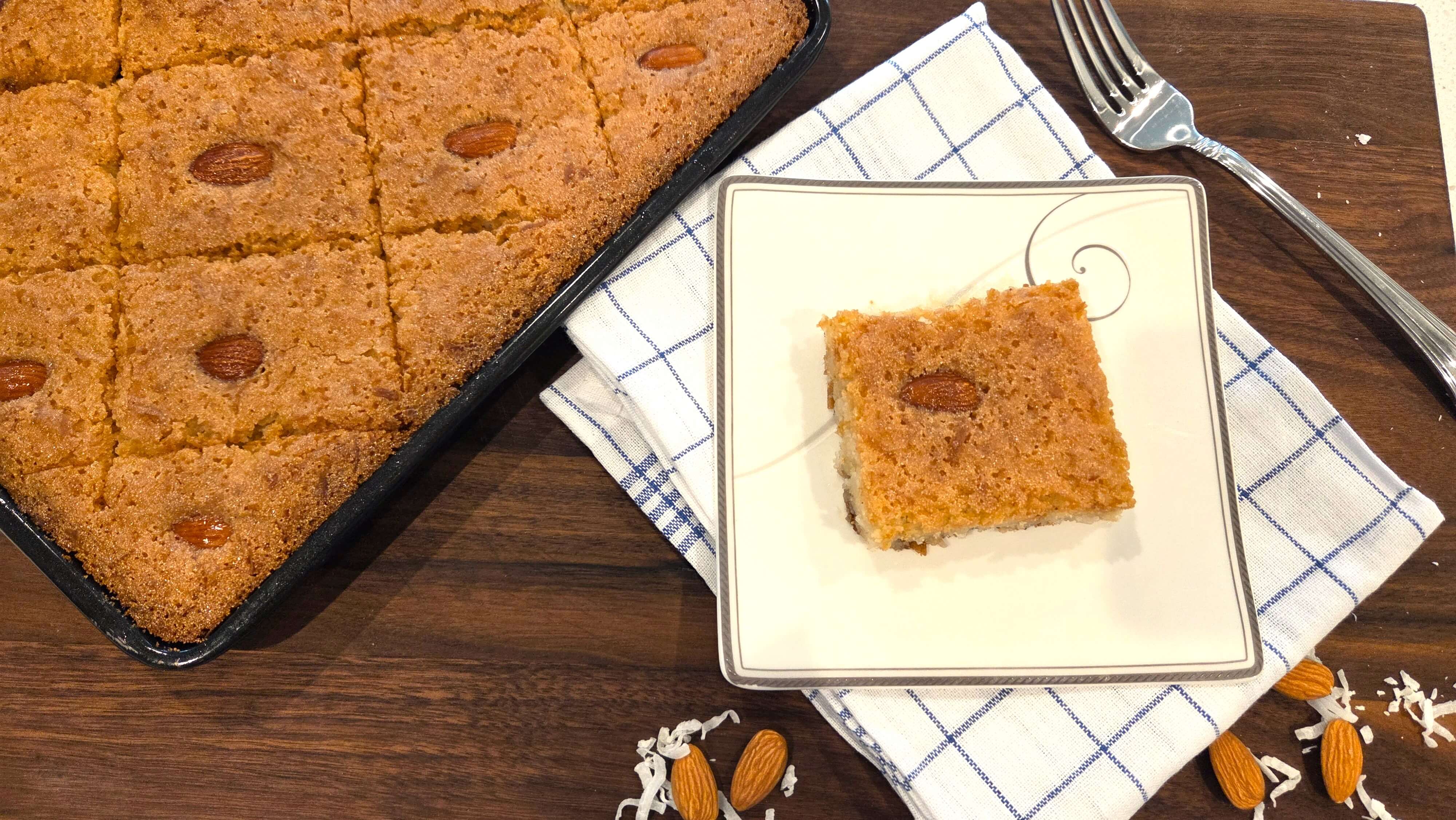
If you tell an old Egyptian grandmother that you’re making Vegan Basbousa, she might look at you like you’ve lost your mind! Traditional Egyptian basbousa is famous for its rich, buttery crumb made with ghee and dairy, but this plant-based version delivers the same irresistibly moist, syrup-soaked texture without any eggs or dairy.
The secret is my easy combination of creamy coconut milk and vegetable oil, which keeps the fine semolina tender while giving the cake a beautifully rich texture. After baking, the golden basbousa is drenched in a warm lemon-scented syrup that soaks into every crumb, creating those deliciously crisp edges and soft, melt-in-your-mouth center we all love.
With less than 10 minutes of hands-on prep, this easy Egyptian dessert is perfect for anyone who is vegan, dairy-free, or simply wants a lighter twist on a beloved classic. I’ll also share all my tips for getting the perfect texture and beautifully defined diamond pieces every time!
What Is Basbousa?
If you are new to Middle Eastern sweets, think of basbousa as one of Egypt’s most beloved semolina desserts. Unlike Western cakes made primarily with wheat flour, basbousa is traditionally made with semolina, which gives it a distinctive tender, slightly crumbly texture. Some versions also include coconut for extra flavor and texture.
Back home in Cairo, basbousa is baked in large, flat trays until beautifully golden, then soaked with sweet syrup while the cake is still hot. The syrup sinks into the semolina, creating the signature moist, tender texture and sweet finish that makes basbousa so irresistible.
Traditional Egyptian basbousa is commonly made with ghee or butter and may include dairy, but this Vegan Basbousa uses coconut milk and vegetable oil instead. The result is a completely eggless and dairy-free version that still has the rich texture, crisp edges, and syrup-soaked crumb that make this classic Egyptian dessert so special.
Why You’ll Love This Vegan Basbousa
If you want a sweet, golden dessert that fills your kitchen with the irresistible aroma of a traditional Egyptian bakery, you’re going to love this recipe! This easy Vegan Basbousa has all the qualities we love about classic basbousa, with a simple plant-based twist.
- Moist Without Ghee: Coconut milk and vegetable oil keep the fine semolina tender and rich without using butter or ghee.
- Sweet, Syrup-Soaked Texture: The semolina and coconut absorb the warm lemon syrup, giving every bite a deliciously moist texture and sweet citrus flavor.
- Eggless & Dairy-Free: No complicated egg replacers or specialty ingredients are needed. Simple pantry staples create a tender, satisfying crumb.
- Quick Hands-On Prep: The batter comes together in about 10 minutes, making this an easy dessert for busy days and last-minute gatherings.
- Perfect for Sharing: Baked in a 9×13-inch pan and cut into beautiful diamond shapes, it makes plenty of servings for family gatherings, holidays, and celebrations.
- Even Better the Next Day: After resting overnight, the syrup has more time to settle into the cake, making the basbousa wonderfully moist and flavorful the following day.
Simple Ingredients for Homemade Vegan Semolina Cake
My favorite part about making this plant-based version is that you only need a handful of simple ingredients that are easy to find. Here’s what you’ll need to make this soft, syrup-soaked Egyptian semolina cake:
- Fine Semolina Flour: The foundation of the cake. Use fine semolina for a tender, delicate texture rather than a gritty or sandy crumb.
- Unsweetened Coconut Flakes: Adds subtle coconut flavor and extra texture while complementing the semolina.
- Granulated Sugar: Used in both the cake batter and the lemon syrup to give the basbousa its signature sweetness and syrup-soaked finish.
- Baking Powder: Helps lighten the semolina batter and gives the cake a tender texture as it bakes.
- Coconut Milk & Vegetable Oil: These plant-based ingredients provide moisture and richness while replacing the dairy traditionally used in many basbousa recipes.
- Whole Blanched Almonds: A classic basbousa topping. Place one almond in the center of each scored diamond for a beautiful presentation.
- Water & Freshly Squeezed Lemon Juice: These form the base of the sweet syrup. Lemon juice adds a bright citrus note that balances the sweetness.
How to Make Vegan Basbousa Step-by-Step
Making this Egyptian semolina cake is easier than it looks! The batter comes together quickly, then the golden basbousa is soaked in sweet lemon syrup for that signature moist, tender texture. Here’s a closer look at each step before you follow the full recipe in the card below.
- Make the Sweet Syrup:
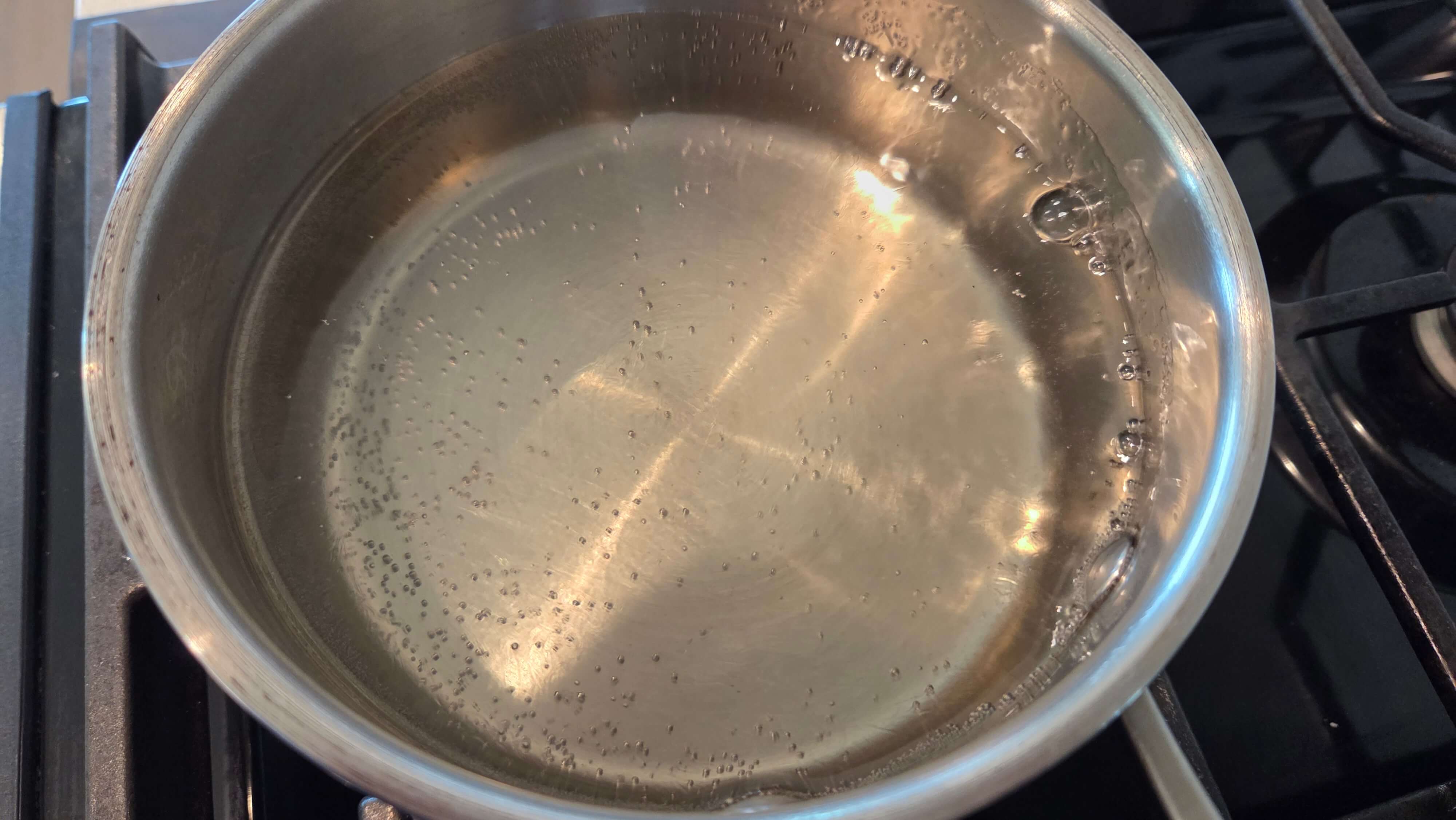
Start by preparing the syrup. Combine the water and sugar in a medium saucepan and bring to a gentle boil over medium heat. Stir until the sugar completely dissolves, then add the freshly squeezed lemon juice. Simmer gently for 10 minutes, then remove from the heat and set aside.
- Mix the Dry Ingredients:
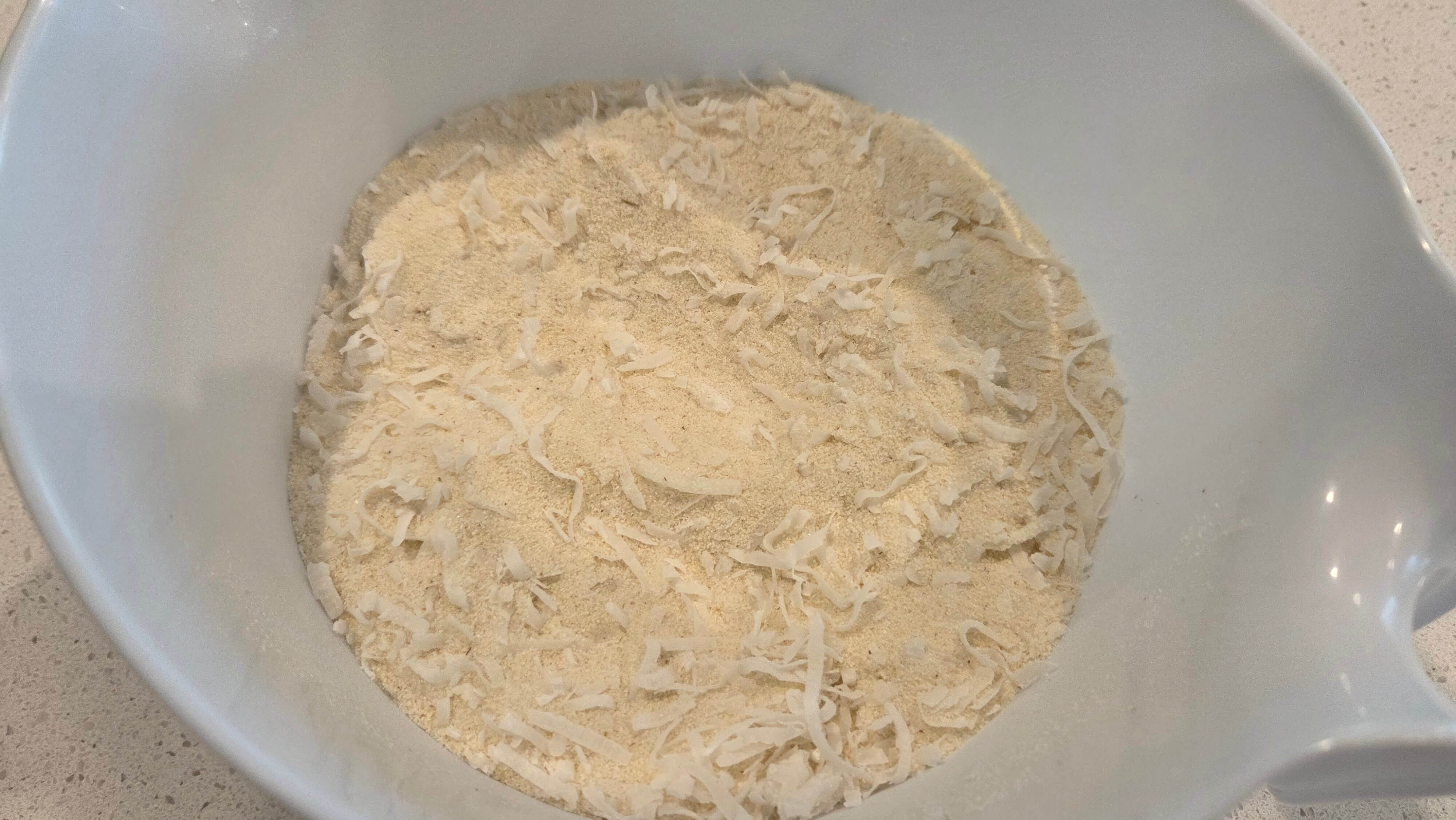
Preheat your oven to 350°F (175°C). In a large mixing bowl, whisk together the fine semolina flour, unsweetened coconut flakes, sugar, and baking powder. Make sure everything is evenly combined before adding the wet ingredients.
- Add the Wet Ingredients:
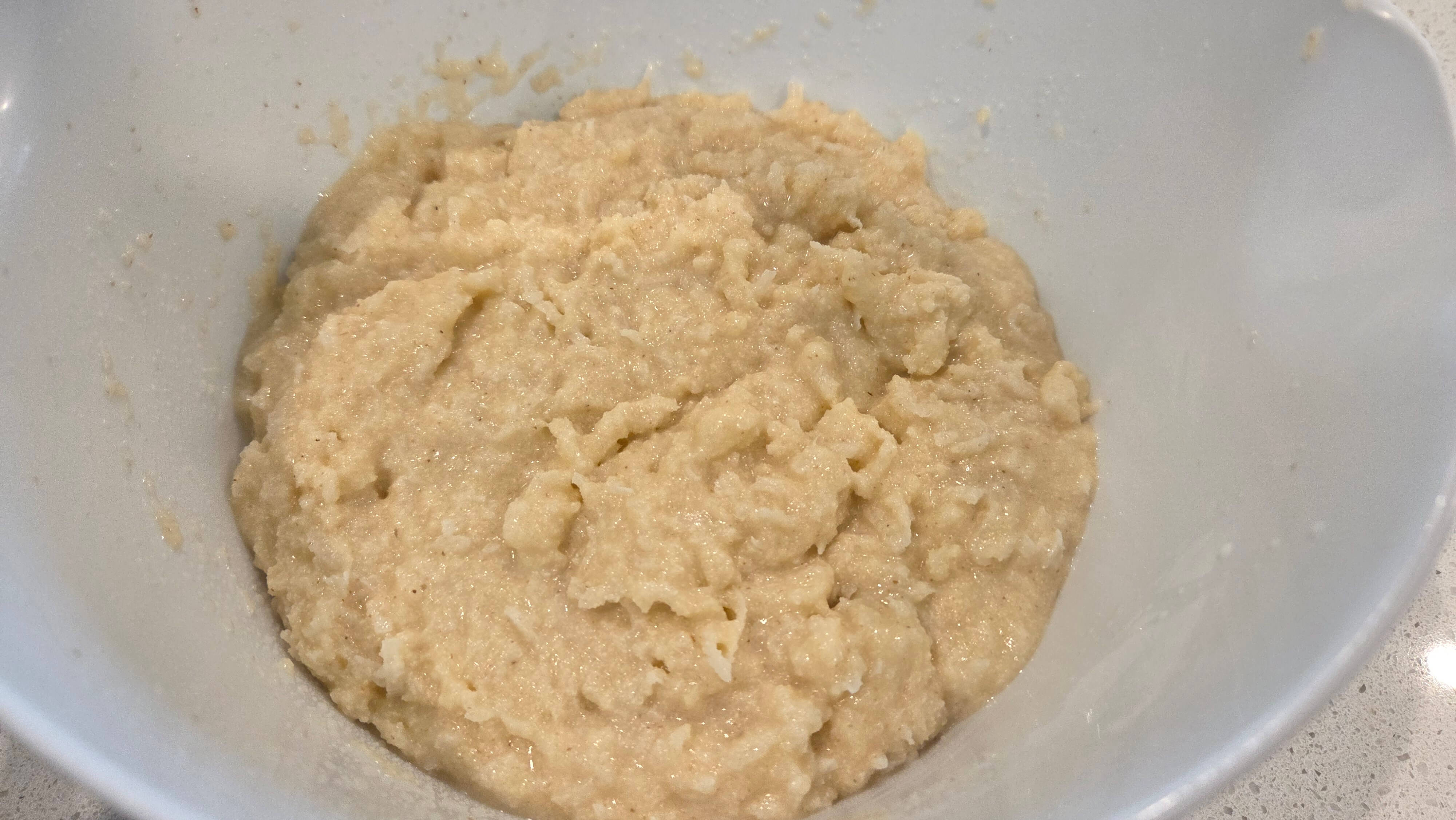
Pour the vegetable oil and coconut milk into the dry mixture. Stir with a sturdy spoon until you have a thick, uniform batter with no dry pockets. Let the batter rest for 5 minutes so the fine semolina can absorb some of the liquid and the mixture can settle before baking.
- Assemble:
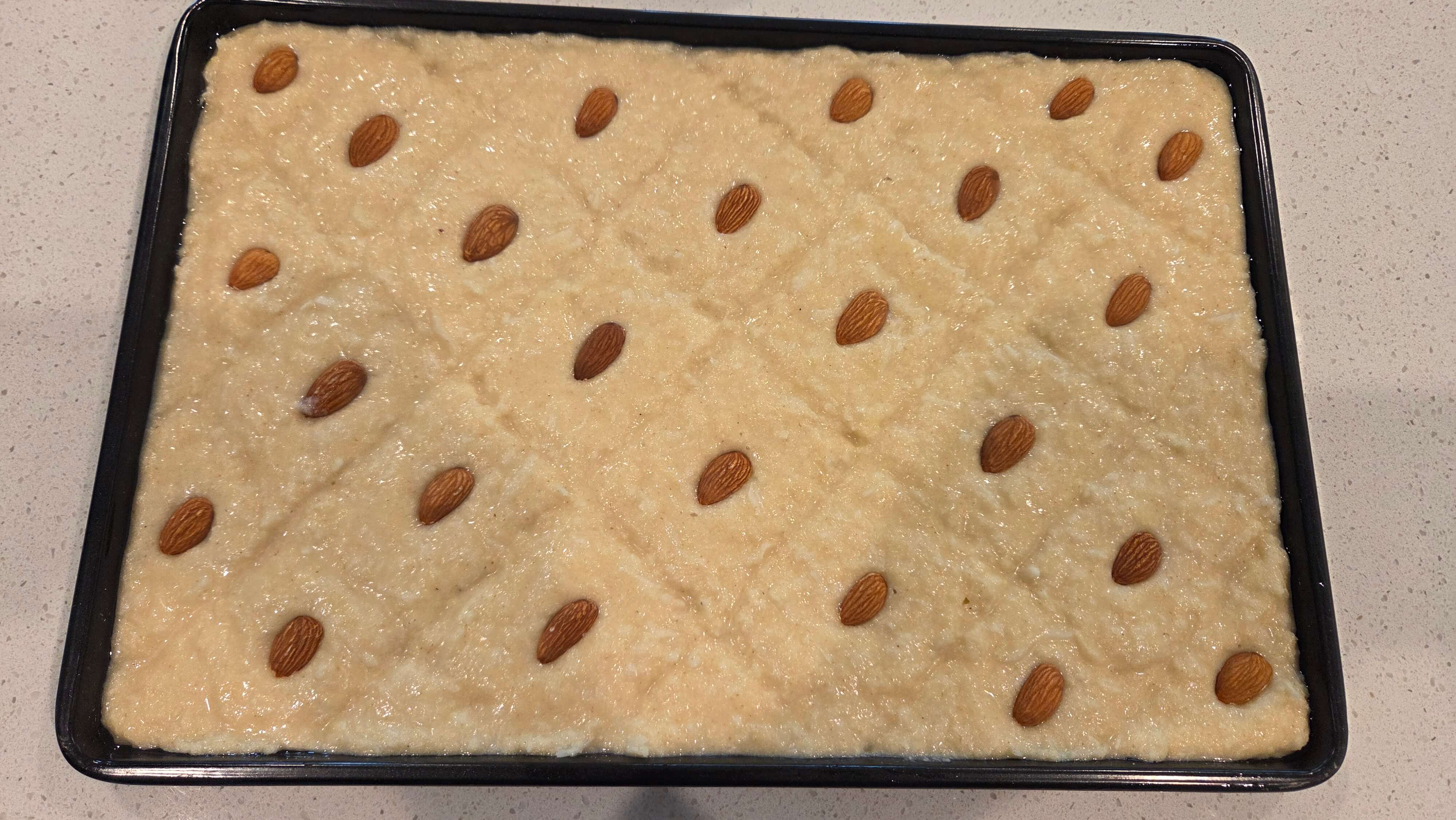
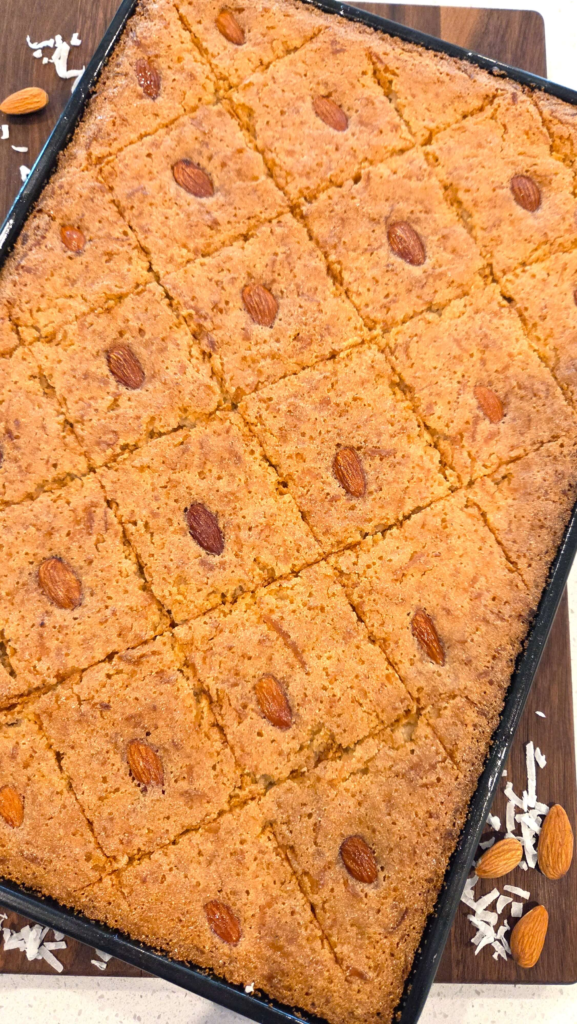
Lightly grease a 9×13-inch baking pan, then spread the batter evenly into the pan and smooth the surface. Use a sharp knife to score the batter into diamond shapes without cutting all the way through. Place one whole blanched almond in the center of each diamond and press it down gently so it stays in place.
- Bake & Soak:
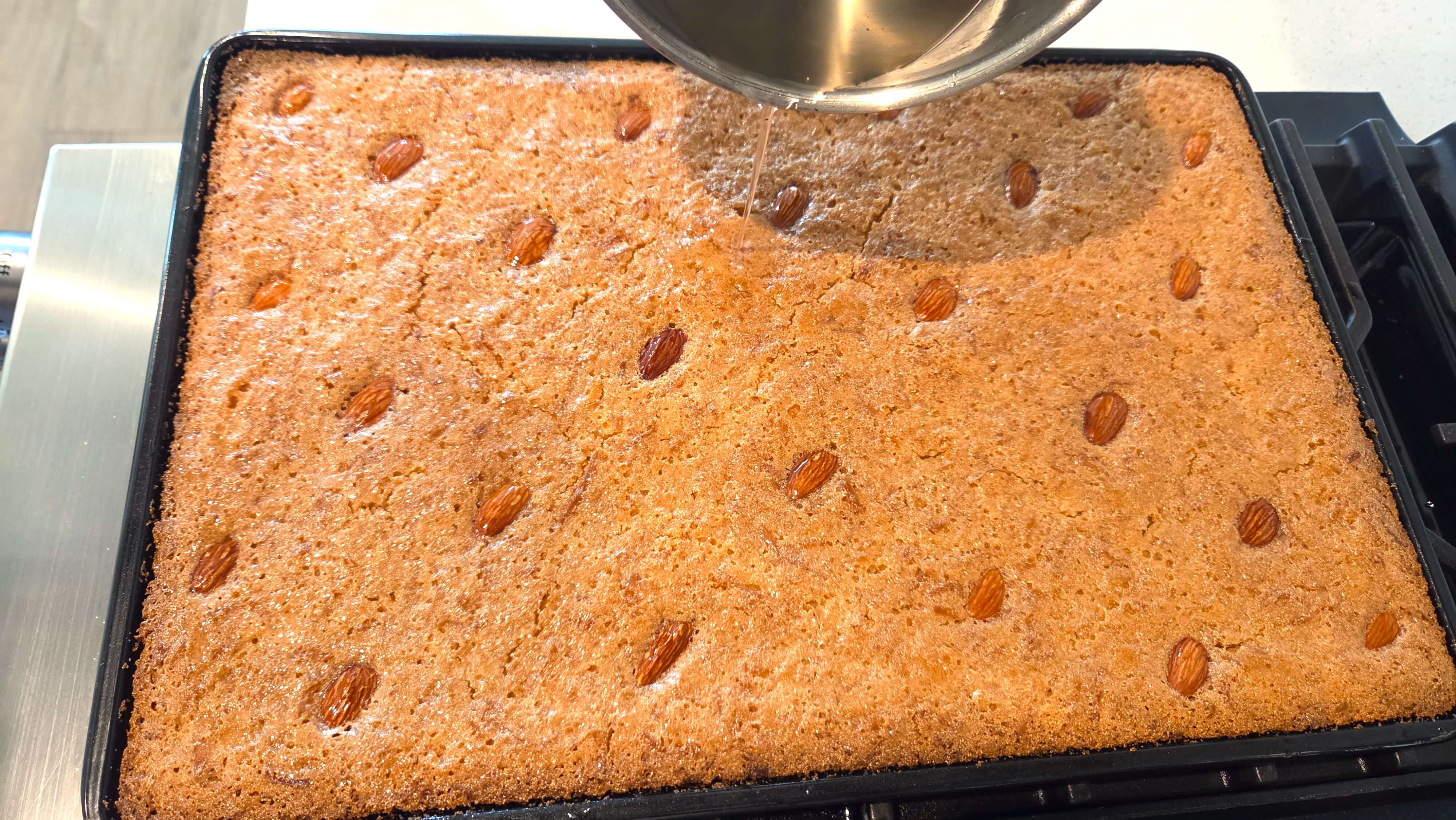
Bake for 30–35 minutes, or until the top is golden brown and the edges are lightly caramelized. About 5 minutes before the cake is done, gently reheat the syrup until hot if it has cooled. Remove the basbousa from the oven and immediately pour the hot syrup evenly over the entire surface, allowing it to soak into the cake.
- Cool & Serve:
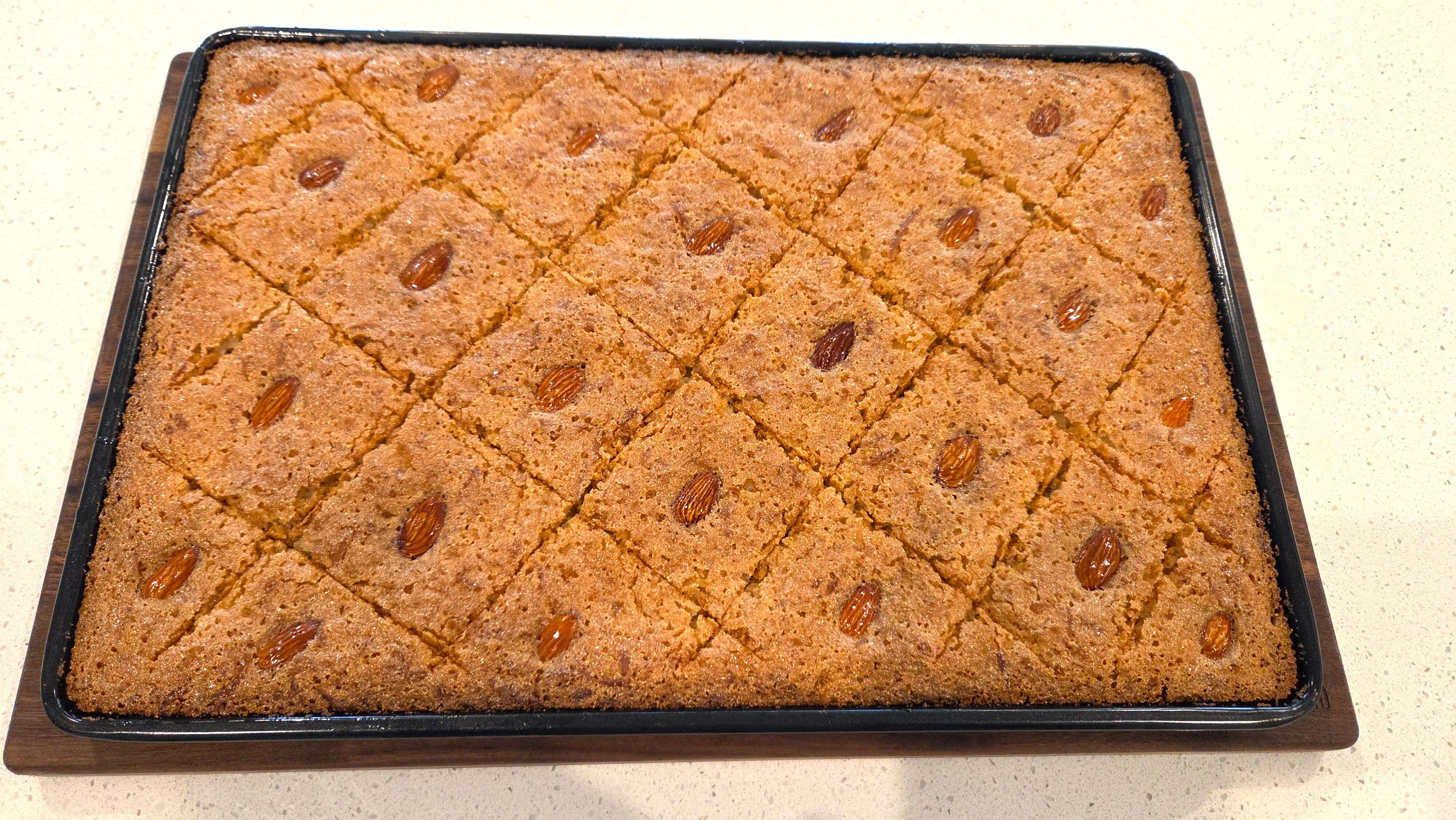
Let the basbousa rest uncovered for at least 1 hour before slicing. This gives it time to absorb the syrup and set, helping the diamond-shaped pieces hold together when cut. Serve at room temperature with a hot cup of tea or Arabic coffee.
Tips for Making Perfect Vegan Basbousa
Making this semolina cake is easier than you think! A few simple techniques will help you get a beautifully golden top, crisp edges, a tender crumb, and plenty of sweet lemon syrup in every bite.
- Keep the Cake and Syrup Hot: For the best syrup absorption, pour the hot syrup over the basbousa as soon as it comes out of the oven. If the syrup has cooled, gently reheat it before pouring. This helps the syrup soak evenly into the hot cake.
- Do Not Skip the 5-Minute Batter Rest: After mixing the vegetable oil and coconut milk into the semolina mixture, let the batter rest for 5 minutes before transferring it to the pan. This gives the fine semolina time to absorb some of the liquid and helps create a cohesive texture.
- Use Fine Semolina: Stick with fine semolina flour for this recipe. Avoid extra-coarse semolina or all-purpose flour, as they can produce a noticeably different texture and prevent the basbousa from becoming tender.
- Let It Cool Before Slicing: As tempting as it is to cut into the syrup-soaked cake right away, give it at least 1 hour to rest uncovered. This allows the syrup to settle into the cake and gives the basbousa time to firm up, making it much easier to cut into clean diamond-shaped pieces.
What to Serve with Vegan Basbousa
As an Egyptian, I love serving this sweet, syrup-soaked cake alongside hot drinks and refreshing desserts. If you’re putting together a Middle Eastern-inspired dessert spread, these pairings are especially delicious with Vegan Basbousa.
- Hot Drinks: The sweetness of basbousa pairs beautifully with a warm drink. Try it with fresh mint tea, Turkish coffee, or Arabic coffee for a simple and satisfying finish to the meal.
- Vegan Sweets: For a larger dessert spread, serve the golden semolina diamonds alongside other plant-based treats. They pair wonderfully with Vegan Date Pinwheel Cookies or chilled Qamar Al Din Pudding.
- Fresh Fruit: Fresh fruit adds a light, refreshing contrast to the sweet syrup. A colorful bowl of fresh berries, sliced oranges, grapes, or seasonal fruit can help balance the richness of the basbousa.
How to Store and Reheat Vegan Basbousa
If you have leftovers, save them for the next day! The basbousa stays wonderfully moist as it continues to absorb the sweet lemon syrup. For the best texture and flavor, follow these storage and reheating tips:
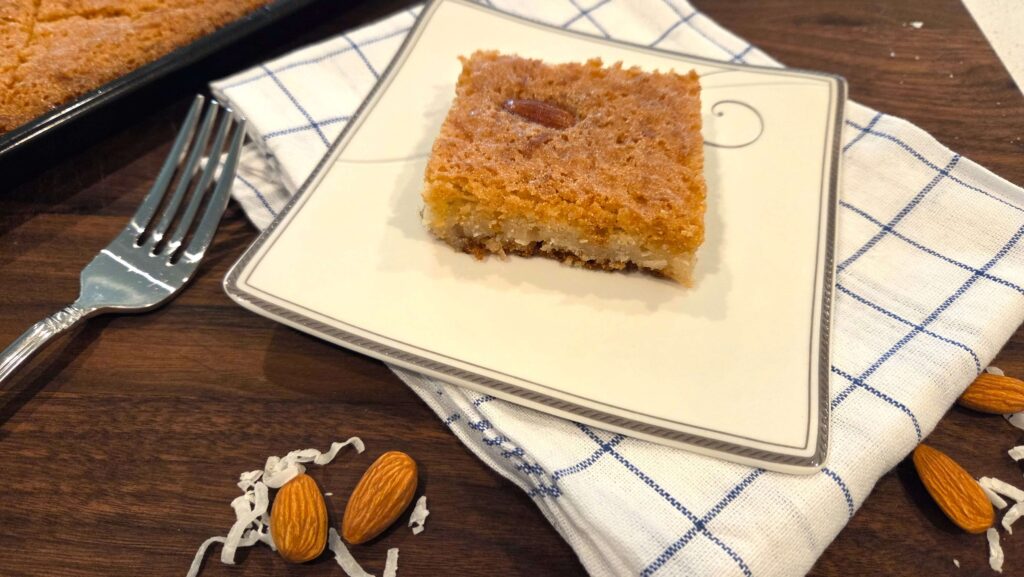
- Refrigerate for Up to 4 Days: Once the basbousa has cooled completely, cover the baking dish tightly with plastic wrap or foil, or transfer individual pieces to an airtight container. Store in the refrigerator for up to 4 days.
- Freeze for Up to 3 Months: Basbousa freezes well. Wrap individual diamond-shaped pieces tightly, then place them in a freezer-safe bag or container. Freeze for up to 3 months. Thaw overnight in the refrigerator or at room temperature until completely thawed.
- Serve at Room Temperature: For the best texture, let refrigerated basbousa sit at room temperature for a short time before serving. This allows the cake to soften slightly after chilling.
- Quick Reheating: To enjoy it warm, place a piece on a microwave-safe plate and heat for 15–20 seconds. If it needs more warmth, continue in short intervals until heated to your liking.
Common Questions About Making Vegan Basbousa
If you’re making this plant-based semolina cake for the first time, you may have a few questions about the semolina, syrup, and baking process. Here are some helpful answers to help you make a soft, moist, syrup-soaked Vegan Basbousa at home.
Fine semolina has smaller grains, which gives this cake a more tender and cohesive texture. It also absorbs the coconut milk and oil more evenly, helping the basbousa hold together when sliced. Coarse semolina can create a more pronounced, grainy texture and may require different liquid ratios or resting times.
For the best results, the syrup and cake should both be hot when combined. Pouring hot syrup over the freshly baked basbousa helps it absorb the syrup more readily and evenly. If your syrup has cooled while the cake is baking, simply warm it gently before pouring it over the hot cake.
The short resting period gives the fine semolina time to absorb some of the coconut milk and settle into the batter. This helps create a more cohesive mixture and contributes to the tender texture of the finished cake. Since fine semolina absorbs liquid differently from coarse semolina, this brief rest is especially useful for this recipe.
Yes. You can use unsweetened almond milk or unsweetened soy milk if you prefer. However, coconut milk adds extra richness and works particularly well in this vegan version because it helps replace some of the richness traditionally provided by ghee or butter in basbousa.
Use raw, blanched almonds rather than roasted or salted almonds. Place one almond in the center of each scored diamond and press it down lightly into the batter. Bake according to the recipe until the basbousa is golden brown. If the almonds begin browning too quickly, loosely cover the top with foil for the remaining baking time.
Ready to turn on your oven and fill your kitchen with the sweet, lemon-scented aroma of freshly baked Vegan Basbousa? Grab the printable recipe card below for the full ingredient list, step-by-step instructions, and helpful tips for making this delicious Egyptian dessert at home!
Vegan Basbousa
Ingredients
Method
- Make the Sweet Syrup: Combine the water and sugar in a medium saucepan and bring to a gentle boil over medium heat. Stir until the sugar dissolves, then add the lemon juice. Simmer gently for 10 minutes, then set aside to cool.
- Mix the Dry Ingredients: Preheat your oven to 350°F (175°C). In a large mixing bowl, whisk together the semolina, coconut flakes, sugar, and baking powder.
- Add the Wet Ingredients: Stir in the oil and coconut milk with a sturdy spoon until a thick, uniform batter forms. Let the batter rest for 5 minutes.
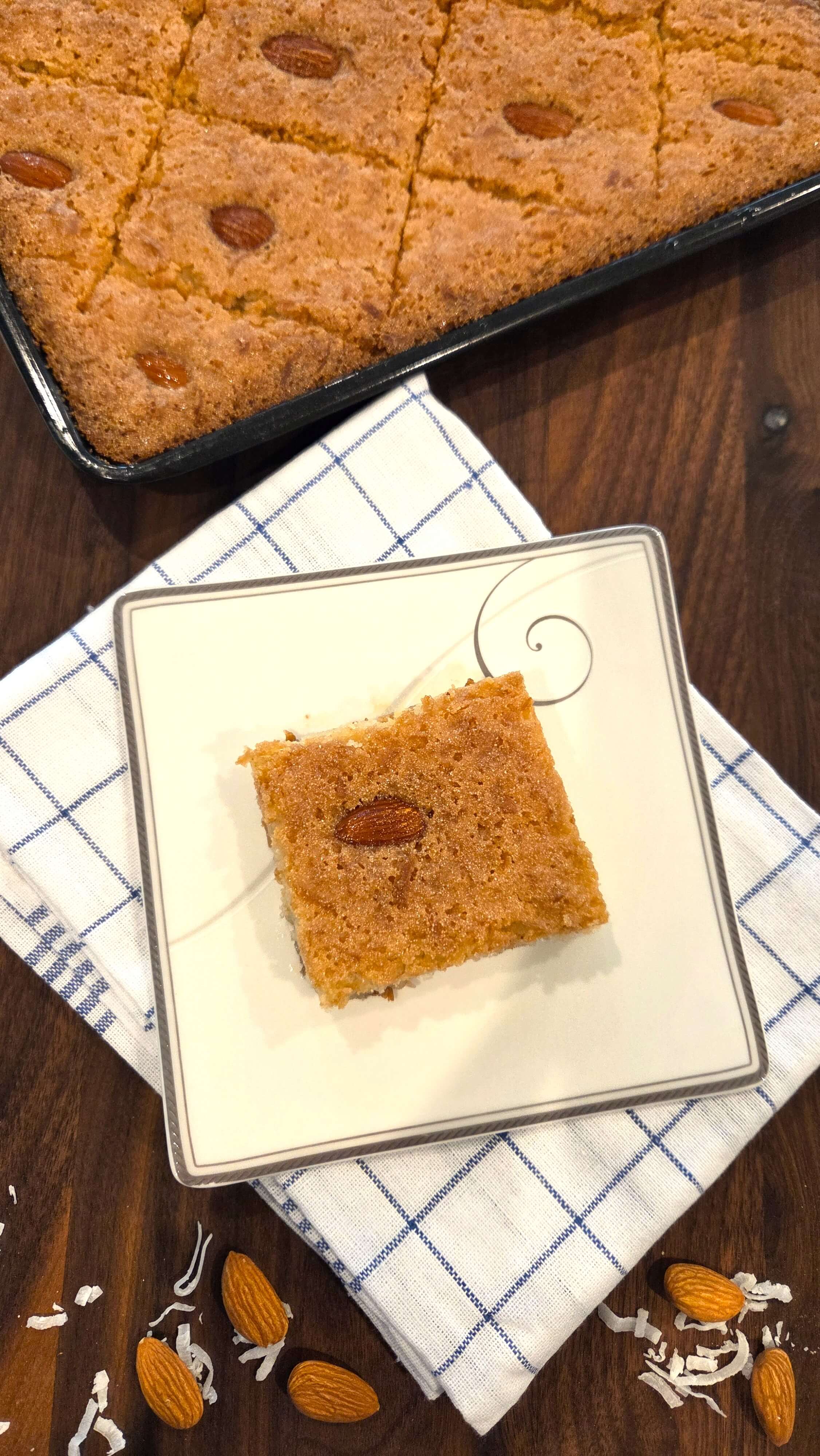
- Assemble: Spread the batter evenly into a lightly greased 9×13-inch pan. Score the surface into diamonds with a sharp knife, then place one whole almond in the center of each diamond, pressing down very lightly so the almonds stick to the surface.
- Bake & Soak: Bake for 30–35 minutes, or until the top is golden brown and the edges are lightly caramelized. About 5 minutes before the cake is done, return the syrup to the stove and heat until piping hot. Remove the cake from the oven and immediately pour the hot syrup evenly over the hot cake.
- Cool & Serve: Let the basbousa rest for at least 1 hour to absorb the syrup and set before slicing. Serve alongside a hot cup of tea or Arabic coffee.
Video
Notes
- Keep the cake and syrup hot: For the best absorption, pour the hot syrup over the cake immediately after it comes out of the oven. If the syrup has cooled, gently reheat it before pouring.
- Rest the batter for 5 minutes: Let the batter rest for 5 minutes after mixing. This gives the semolina time to absorb some of the liquid and helps create a tender, cohesive texture.
- Use fine semolina: Fine semolina gives this basbousa a softer, more delicate texture. Avoid extra-coarse semolina or all-purpose flour, which can change the texture significantly.
- Let it cool before slicing: Allow the basbousa to rest uncovered for at least 1 hour after adding the syrup. This gives the cake time to absorb the syrup and set, helping the diamond pieces hold their shape.
If you bake a golden tray of this Vegan Basbousa at home, I would love to hear how your soft, syrup-soaked semolina diamonds turned out! Leave a comment below and let me know if you served yours with a hot cup of fresh mint tea or added it to a dessert platter alongside some vegan date pinwheel cookies.
Don’t forget to save this recipe for your next cozy family night or special gathering, and share it with friends who love making simple, eggless, and dairy-free Middle Eastern sweets at home!
If you enjoyed this recipe, please leave a ⭐ star rating in the recipe card below. Your rating helps other readers discover and enjoy this recipe too!
More Recipes to Try