
Easy Homemade Egyptian Koshari
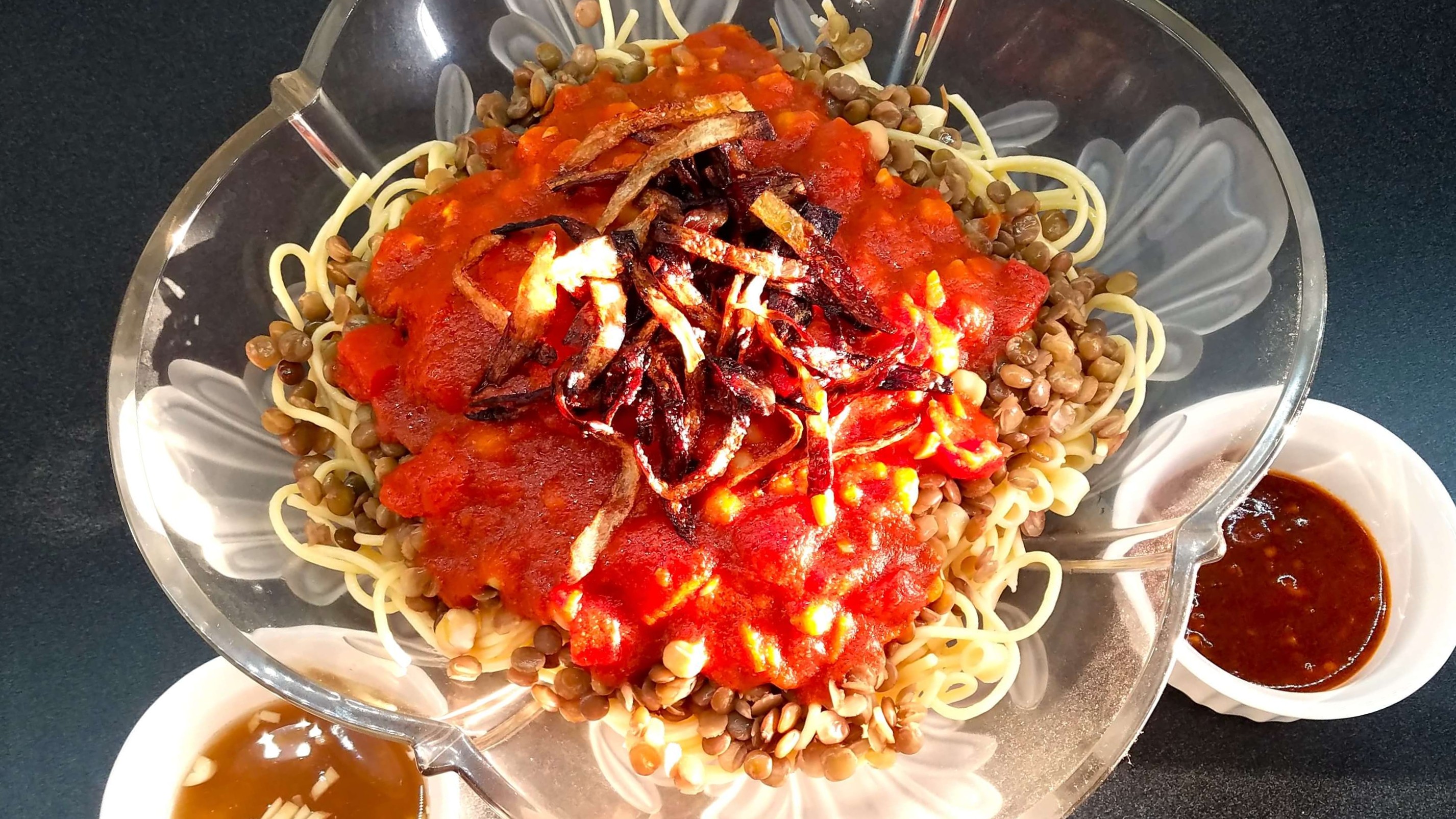
If you want to experience the chaotic, beautiful, and absolutely delicious soul of Cairo in a single bite, you eat a bowl of Egyptian Koshari. Growing up in Egypt, this comforting mix of rice, brown lentils, pasta, chickpeas, and crispy fried onions wasn’t just a meal—it was a favorite street food that I grew up loving. I still remember the rhythmic clanging of koshari vendors quickly scooping layers into metal bowls before topping them with spiced tomato sauce, garlicky Da’ah, and fiery Shatta.
I wanted to bring those familiar Egyptian flavors straight into your kitchen. This Easy Egyptian Koshari recipe follows the traditional layered method, with each component cooked separately and finished with the fragrant onion-infused oil left from frying the crispy warda. It takes a little patience and a few pots, but the result is a hearty, naturally vegan, budget-friendly meal packed with the bold flavors of Egypt.
What Is Egyptian Koshari?
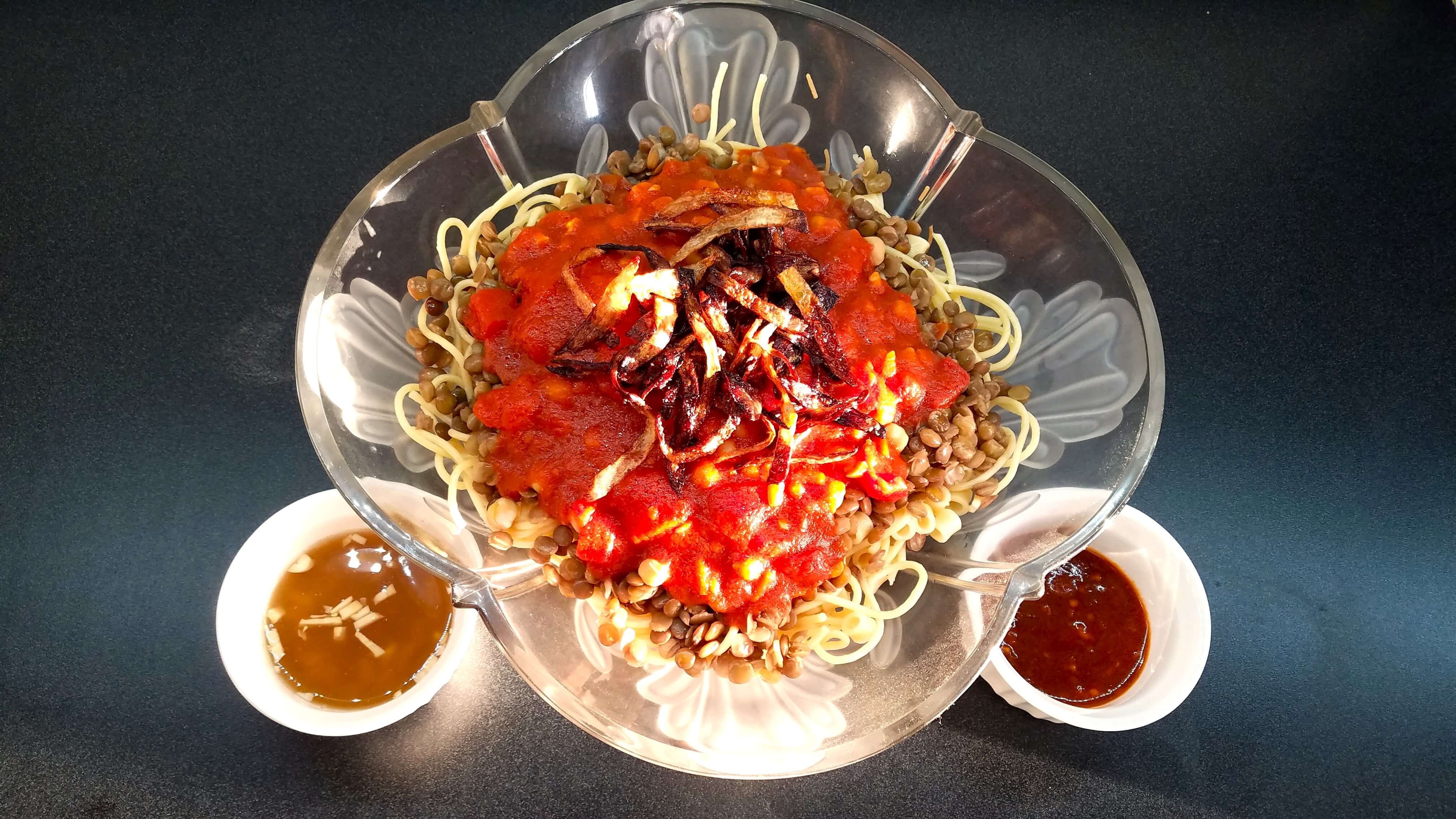
Egyptian Koshari, also spelled Koshary or Kushari, is a hearty Egyptian street-food dish made by layering rice, toasted vermicelli, brown lentils, pasta, and chickpeas in one bowl. It is traditionally topped with a spiced garlic tomato sauce, tangy garlic-vinegar Da’ah, fiery Shatta, and crispy fried onions.
This comforting combination of simple pantry ingredients is one of Egypt’s most beloved dishes. Each layer brings something different—from fluffy rice and earthy lentils to tender pasta, creamy chickpeas, bright tomato sauce, and crunchy fried onions—creating the signature flavor and texture that makes Egyptian Koshari so satisfying.
Why You’ll Love This Easy Egyptian Koshari
If you’ve never made Egyptian Koshari at home before, you’re in for a treat! This hearty street-food favorite combines simple pantry staples into a filling, flavorful meal that the whole family can enjoy.
- Protein-rich, plant-based comfort food: Brown lentils and chickpeas make this a satisfying meatless meal, while rice and pasta add plenty of hearty texture.
- A delicious mix of textures: Fluffy vermicelli rice, tender lentils and pasta, creamy chickpeas, tangy tomato sauce, and crispy fried onions come together in every bite.
- Easy to customize: Adjust the garlic-vinegar Da’ah and spicy Shatta to your family’s preferred level of tang and heat.
- Budget-friendly and great for meal prep: Made with affordable pantry staples, Koshari makes a generous meal and stores well for easy lunches or dinners.
Simple Ingredients for Traditional Egyptian Koshari
Egyptian Koshari may look like a long ingredient list, but most of the ingredients are simple pantry staples. Each one has a specific job, from the crispy fried onions and fluffy vermicelli rice to the tangy tomato sauce, garlic-vinegar Da’ah, and spicy Shatta. Here’s what you’ll need:
- Large yellow onions: Thinly sliced and fried until golden and crisp to make the classic ward topping.
- All-purpose flour and salt: Lightly coat the onions before frying to help them brown and crisp.
- Vegetable oil: Used to fry the onions, then reserved and reused to flavor the rice, lentils, and pasta.
- Long-grain white rice: Washed and drained before cooking to create a fluffy base for the koshari.
- Vermicelli pasta noodles: Broken into small pieces and toasted until golden before cooking with the rice.
- Brown lentils: Washed and simmered until tender while still holding their shape.
- Ditalini and thin spaghetti pasta: Two pasta shapes that give koshari its signature variety of textures.
- Canned chickpeas: Drained, rinsed, and gently warmed before adding to the finished dish.
- Diced tomatoes and tomato sauce: Combined with garlic and spices to create the rich tomato salsa.
- Garlic: Used in both the tomato sauce and the garlic-vinegar Da’ah for a bold, savory flavor.
- White vinegar: The key acidic ingredient in the Da’ah, adding brightness to the hearty layers.
- Ground cumin and coriander: Warm, earthy spices used throughout the lentils, tomato sauce, and Da’ah.
- Ground white pepper: Adds gentle heat and seasoning to the tomato sauce.
- Ground cardamom and nutmeg: Small amounts add warmth and depth to the tomato sauce.
- Bay leaves: Simmered in the tomato sauce to add subtle herbal flavor.
- Crushed red pepper flakes: Used to make the fiery Shatta, which can be adjusted to your preferred level of heat.
How to Make Easy Egyptian Koshari Step by Step
Making Easy Egyptian Koshari is all about preparing each component and then bringing everything together at the end. Follow these simple steps to make the crispy onions, flavorful sauces, lentils, vermicelli rice, pasta, and chickpeas before layering everything into one delicious bowl.
- Crisp the onions and reserve the oil
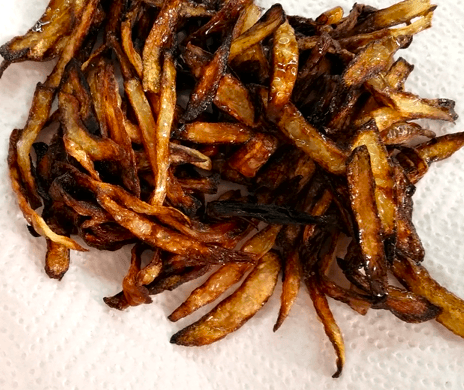
Toss the thinly sliced yellow onions with the flour and salt until evenly coated. Heat the vegetable oil in a large skillet over medium-high heat and fry the onions in small batches until deep golden brown and crisp. Transfer them to a paper-towel-lined plate. Carefully strain the hot onion-infused oil into a heat-safe bowl and reserve.
- Make the tomato sauce
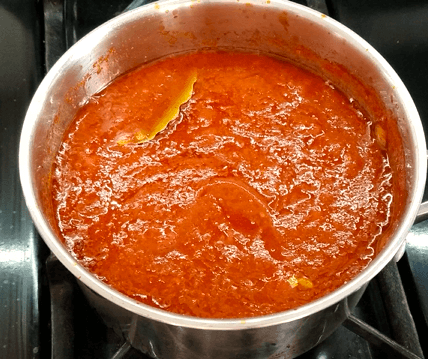
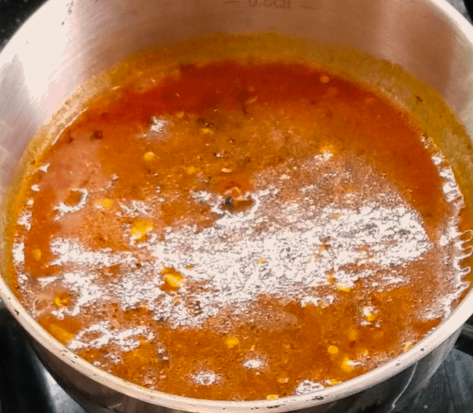
Heat 2 tablespoons of the reserved onion oil in a medium saucepan. Sauté the minced garlic for 1 minute until fragrant. Stir in the diced tomatoes and tomato sauce, then add the cumin, coriander, white pepper, nutmeg, cardamom, salt, and bay leaves. Reduce the heat and simmer for 10 minutes, until slightly thickened.
- Prepare the garlic-vinegar Da’ah
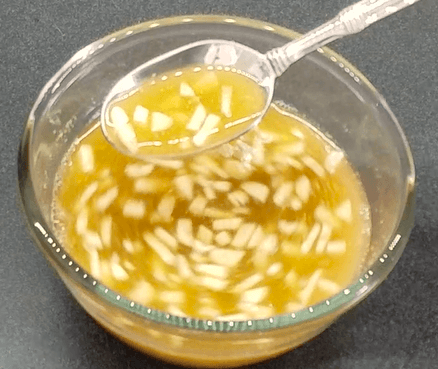
In a small bowl, whisk together the water, white vinegar, 5 minced garlic cloves, salt, cumin, and coriander. Set the Da’ah aside and let it rest for 15 minutes before serving to allow the flavors to develop.
- Make the spicy Shatta
Combine 1/4 cup of the prepared tomato sauce and 1/4 cup of the Da’ah in a small saucepan. Stir in the crushed red pepper flakes and simmer for 10 minutes. Adjust the amount of red pepper flakes to your preferred level of heat.
- Cook the lentils
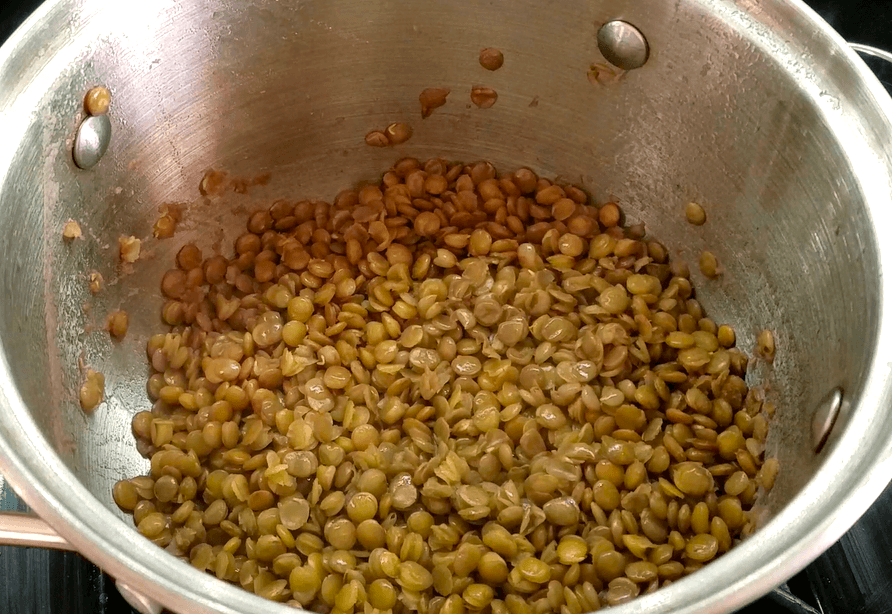
Heat 2 tablespoons of the reserved onion oil in a medium pot over medium heat. Add the washed brown lentils and stir for 1 to 2 minutes. Add the 3 cups of boiling water, cumin, and salt. Simmer for about 15 minutes, or until the lentils are tender but still hold their shape. Drain and set aside.
- Make the vermicelli rice
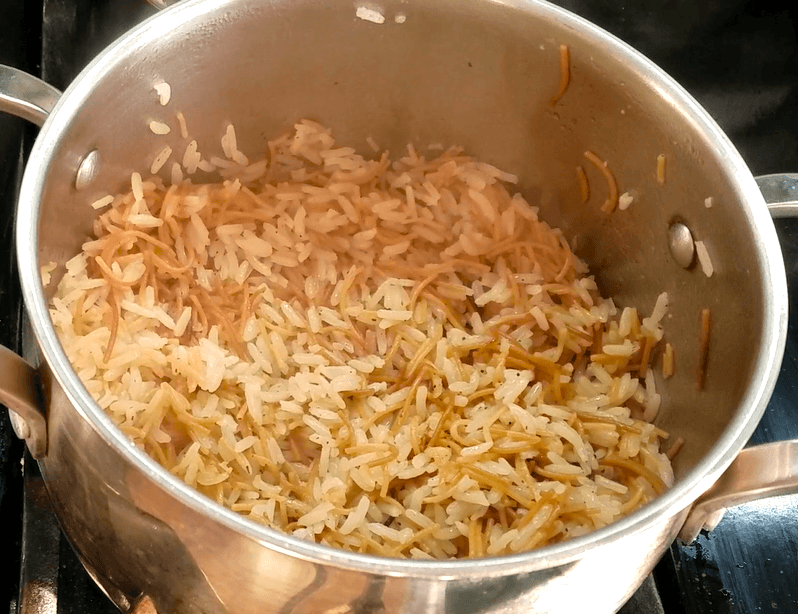
Heat 3 tablespoons of the reserved onion oil in a large pot. Add the vermicelli and toast for 3 to 4 minutes, stirring frequently, until golden brown. Add the washed rice and stir for 1 minute. Pour in the 2 cups of boiling water and season with salt and black pepper. Cover tightly, reduce the heat to low, and cook for 20 minutes. Turn off the heat and fluff gently with a fork.
- Cook the pasta
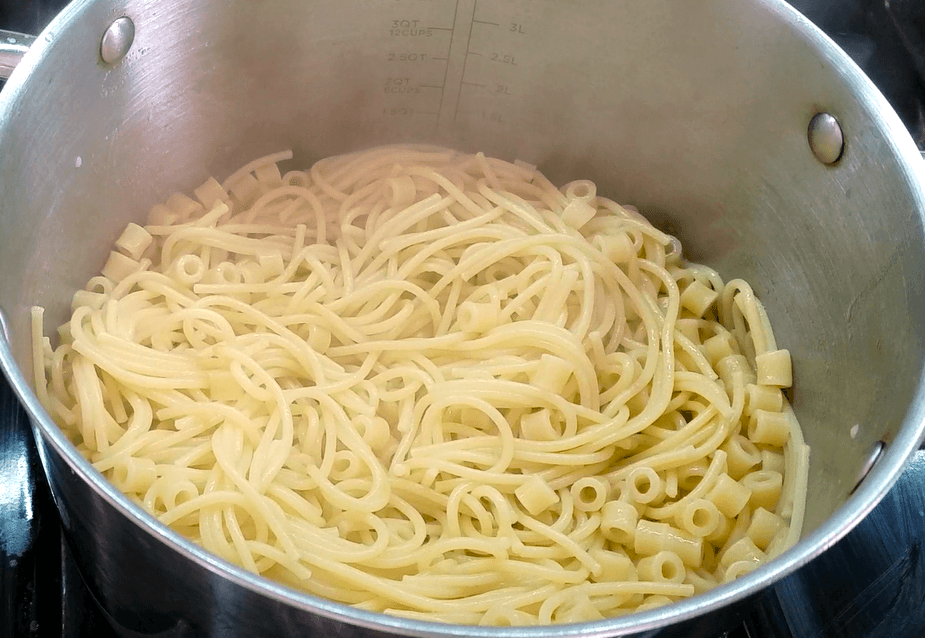
Bring a large pot of salted water to a boil. Add the ditalini and broken thin spaghetti and cook until al dente. Drain well without rinsing, then return the pasta to the warm pot and toss with 3 tablespoons of the reserved onion oil.
- Warm the chickpeas
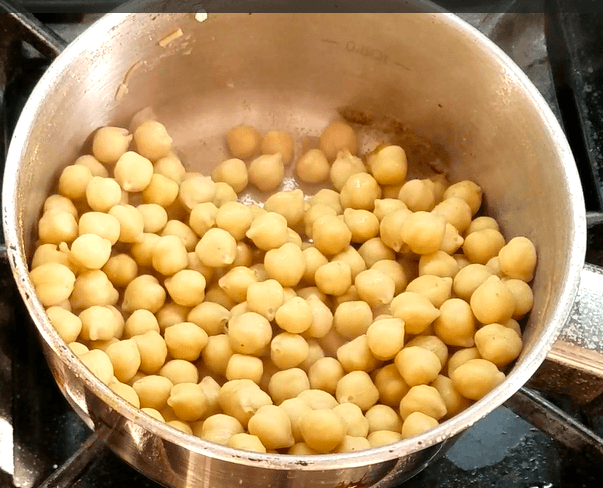
Add the drained chickpeas to a small pot with a splash of water, a pinch of salt, and cumin. Warm gently until heated through, then drain if needed.
- Layer and serve
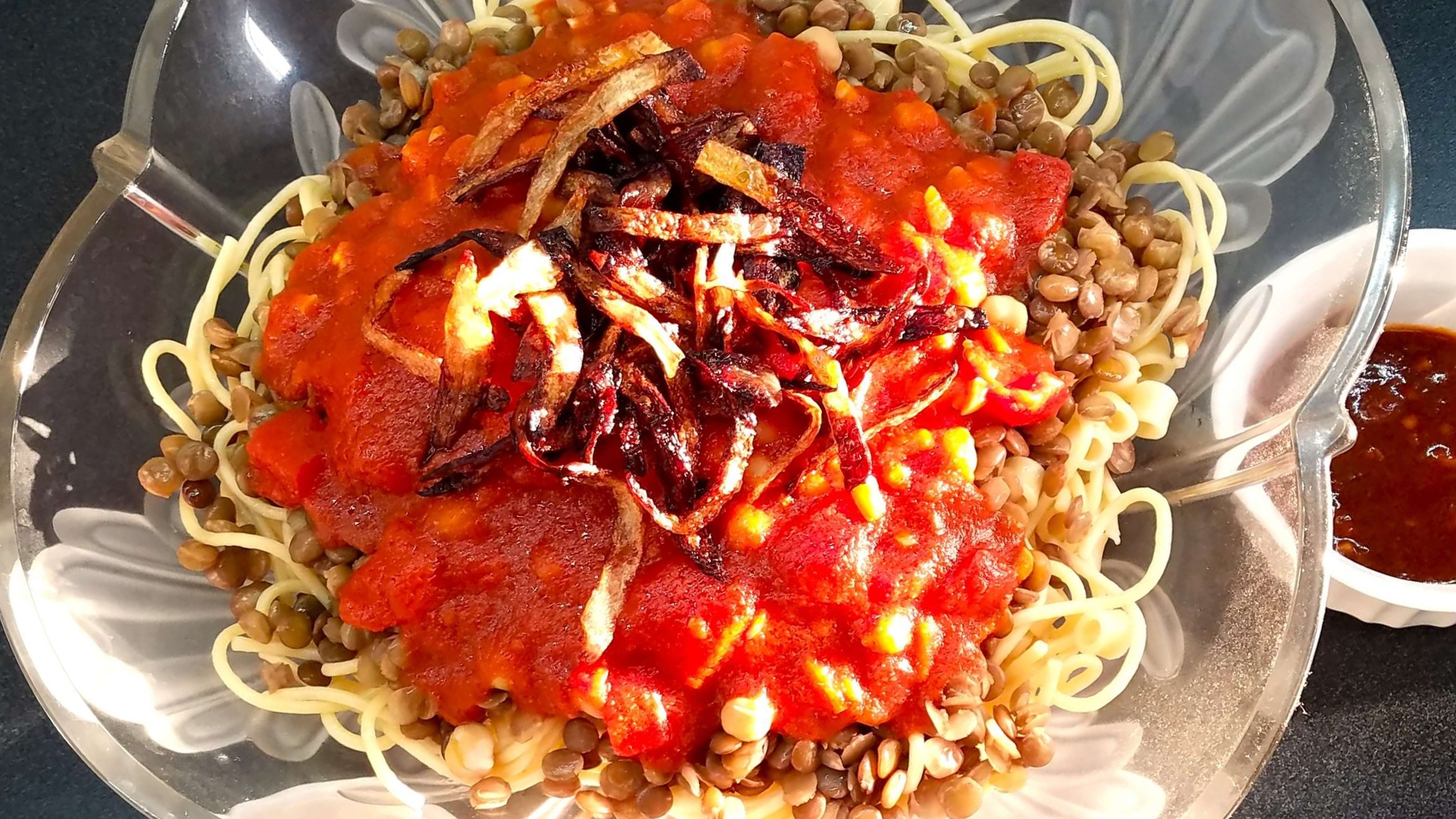
Arrange all the cooked components for easy assembly. Layer the vermicelli rice, lentils, pasta, and warm chickpeas in serving bowls. Spoon the tomato sauce over the top, then drizzle with the garlic-vinegar Da’ah and spicy Shatta. Finish with plenty of crispy fried onions and serve hot.
My Top Secrets for Perfect Koshari
Koshari is simple to make once you prepare each component separately and give every layer a little attention. These simple tips will help you get fluffy rice, tender lentils, crisp onions, and perfectly seasoned sauces every time.
- Reuse the onion-infused oil: Fry the onions first and reserve the oil. Use it to toast the vermicelli, cook the rice and lentils, and toss with the cooked pasta. The onion-infused oil adds flavor throughout the dish and helps tie all the components together.
- Fry the onions in small batches: Toss the thinly sliced onions with a light coating of flour and a pinch of salt just before frying. Fry them in small batches over medium-high heat so they have enough room to crisp instead of steaming. Remove them when they’re deep golden brown and crisp, then drain on paper towels.
- Keep the pasta separate: Drain the cooked pasta thoroughly without rinsing, then immediately toss it with a few tablespoons of the reserved onion oil. This helps prevent the pasta from sticking together while you prepare the other components.
- Don’t overcook the lentils: Simmer the brown lentils until they’re tender but still hold their shape. You want them soft enough to eat but firm enough to remain distinct when layered with the rice and pasta.
- Let the Da’ah rest: After mixing the garlic, vinegar, water, cumin, coriander, and salt, let the Da’ah sit for about 15 minutes before serving. This gives the flavors time to develop.
- Prepare the components ahead: The tomato sauce, Da’ah, and Shatta can be prepared ahead of time, making assembly much easier when you’re ready to serve. Keep the crispy onions separate so they stay crunchy.
What to Serve with Egyptian Koshari
Egyptian Koshari is hearty and filling on its own, but a few fresh and refreshing sides can round out the meal beautifully. Here are some of my favorite ways to complete an Egyptian-inspired dinner:
- Fresh cucumber tomato salad: A crisp salad is my favorite pairing for koshari. The cool cucumbers, juicy tomatoes, fresh herbs, and bright dressing add freshness and balance to the hearty rice, lentils, and pasta. Try my Easy Mediterranean Cucumber Tomato Salad for an easy side.
- Warm pita bread: Pita isn’t necessary because koshari is already a complete meal, but it’s a nice option if you want extra bread on the table. My Easy Pita Bread Recipe No Oven is soft, warm, and easy to make.
- Egyptian rice pudding: Finish the meal with something cool and creamy. My Egyptian Rice Pudding (Roz Bel Laban) is a classic Egyptian dessert that’s especially delicious served chilled.
- Egyptian Mahalabia: For something lighter, try a chilled bowl of Egyptian Mahalabia topped with pistachios. Its creamy texture and delicate flavor make a refreshing finish after a hearty bowl of koshari.
How to Store and Reheat Egyptian Koshari
Egyptian Koshari is great for meal prep because the individual components can be stored separately and assembled whenever you’re ready to eat. Keeping the layers separate helps preserve their individual textures and keeps the crispy onions crunchy. Here’s how to store and reheat your leftovers:
- Store the components separately: Transfer the rice, lentils, pasta, chickpeas, tomato sauce, and Da’ah into separate airtight containers. Keep the crispy fried onions in their own container at room temperature or according to your preferred storage method so they stay crisp. Store the Shatta separately as well.
- Refrigerate for up to 4 days: Refrigerate the cooked rice, lentils, pasta, chickpeas, tomato sauce, Da’ah, and Shatta promptly in airtight containers. Use within 3 to 4 days for the best quality.
- Reheat the savory components: Place the rice, lentils, and pasta in a skillet with a small splash of water or a little reserved onion oil. Warm gently over medium-low heat for 3 to 5 minutes, stirring occasionally, until heated through. Warm the chickpeas and tomato sauce separately.
- Assemble just before serving: Layer the warmed rice, lentils, pasta, and chickpeas in a bowl. Add the tomato sauce, Da’ah, and Shatta, then finish with the crispy fried onions right before serving so they retain their crunch.
Frequently Asked Questions (FAQs)
If you’re making Egyptian Koshari for the first time, these answers will help you get the individual components, sauces, and crispy onions just right.
Sticky rice or mushy components usually come from using too much water or overcooking the rice, lentils, or pasta. Follow the cooking times and water amounts in the recipe, and keep each component separate until you’re ready to assemble the koshari. Toss the drained pasta with a little reserved onion oil to prevent it from sticking.
Slice the onions very thinly and toss them with a light coating of flour and salt before frying. Fry them in small batches over medium-high heat so they have enough room to crisp instead of steaming. Transfer them to a paper-towel-lined plate as soon as they’re deep golden brown and crisp.
This recipe is naturally vegan and vegetarian because it contains no meat, dairy, or eggs. It is not gluten-free because the vermicelli, ditalini, and thin spaghetti contain wheat. You can make a gluten-free version by using certified gluten-free pasta and vermicelli.
Yes. This recipe uses long-grain Jasmine rice, which cooks up light and fluffy. If you use a different type of rice, you may need to adjust the water amount and cooking time according to the rice variety.
Traditional-style Da’ah is a simple garlic-vinegar sauce made without cooking. Whisk together the minced garlic, white vinegar, water, salt, cumin, and coriander, then let it rest for 15 minutes before serving. The resting time allows the garlic and spices to infuse the vinegar.
Yes. Prepare the individual components ahead of time and store them separately in airtight containers in the refrigerator for up to 3–4 days. Reheat the rice, lentils, pasta, chickpeas, and tomato sauce separately, then assemble just before serving. Keep the crispy onions separate and add them at the very end so they stay crunchy.
Ready to bring the comforting flavors of Egyptian Koshari to your kitchen? Grab the printable recipe card below for the full ingredients, step-by-step instructions, and all the details you need to make this delicious Easy Egyptian Koshari at home.
Easy Egyptian Koshari
Ingredients
Method
- Crisp the onions and reserve the oil: Toss the thinly sliced yellow onions with the flour and salt until evenly coated. Heat the vegetable oil in a large skillet over medium-high heat. Fry the onions in small batches until deep golden brown and crisp. Transfer them to a paper-towel-lined plate. Carefully strain the hot onion-infused oil into a heat-safe bowl and reserve.
- Make the tomato sauce: Heat 2 tablespoons of the reserved onion oil in a medium saucepan. Sauté the minced garlic for 1 minute until fragrant. Stir in the diced tomatoes and tomato sauce, then add the cumin, coriander, white pepper, nutmeg, cardamom, salt, and bay leaves. Reduce the heat and simmer for 10 minutes, until slightly thickened.
- Prepare the garlic-vinegar Da'ah: In a small bowl, whisk together the water, white vinegar, 5 minced garlic cloves, salt, cumin, and coriander. Set the Da'ah aside until ready to serve.
- Make the spicy Shatta: Combine 1/4 cup of the prepared tomato sauce and 1/4 cup of the Da'ah in a small saucepan. Stir in the crushed red pepper flakes and simmer for 10 minutes. Adjust the amount of red pepper flakes to taste.
- Cook the lentils: Heat 2 tablespoons of the reserved onion oil in a medium pot over medium heat. Add the washed brown lentils and stir for 1 to 2 minutes. Add the 3 cups of boiling water, cumin, and salt. Simmer for about 15 minutes, or until the lentils are tender but still hold their shape. Drain and set aside.
- Make the vermicelli rice: Heat 3 tablespoons of the reserved onion oil in a large pot. Add the vermicelli and toast for 3 to 4 minutes, stirring frequently, until golden brown. Add the washed rice and stir for 1 minute. Pour in the 2 cups of boiling water and season with salt and black pepper. Cover tightly, reduce the heat to low, and cook for 20 minutes. Turn off the heat and fluff gently with a fork.
- Cook the pasta: Bring a large pot of salted water to a boil. Add the ditalini and broken thin spaghetti and cook until al dente. Drain well without rinsing, then return the pasta to the warm pot and toss with 3 tablespoons of the reserved onion oil.
- Warm the chickpeas: Add the drained chickpeas to a small pot with a splash of water, a pinch of salt, and cumin. Warm gently until heated through, then drain if needed.
- Assemble and serve: Layer the vermicelli rice, lentils, pasta, and warm chickpeas in serving bowls. Spoon the tomato sauce over the top, then drizzle with the garlic-vinegar Da'ah and spicy Shatta. Finish with plenty of crispy fried onions and serve hot.
Video
Notes
- Save the onion-infused oil: Fry the onions first and reserve the oil. Use it to toast the vermicelli, cook the rice and lentils, and toss with the cooked pasta. This adds delicious flavor throughout the koshari.
- Let the Da’ah rest: Traditional garlic-vinegar Da’ah is not boiled. Whisk the garlic, vinegar, water, salt, cumin, and coriander together, then let it rest for 15 minutes before serving to allow the flavors to develop.
- Adjust the Shatta to taste: Shatta is very spicy, so adjust the crushed red pepper flakes to your preferred heat level. Serve it on the side so everyone can add as much as they like.
There is absolutely nothing quite like digging a large spoon down through those beautiful, steaming layers of rice, lentils, and pasta to catch every single flavor in one spectacular bite! Bringing a piece of my childhood street markets straight into your kitchen is such an honor, and I am so incredibly happy to share this Egyptian classic with your family.
If you make this Easy Egyptian Koshari at home, I would absolutely love to hear how your sauces and crispy onions turned out! Leave a comment below, leave a star rating, and let me know if you served your bowls alongside a fresh Mediterranean salad or kept things classic with some creamy Egyptian rice pudding for dessert.
If you enjoyed this recipe, please leave a ⭐ star rating in the recipe card below. Your rating helps other readers find and enjoy this recipe too!
More Recipes to Try

This is so good ! The sauce is amazing 👏 steps are easy to follow. thank you so much
The tomato sauce and garlic/vinegar sauce are superior 👌 definitely will be making it again
I love koshery i made for my employees and they all loved it too.
Thanks for the recipe